

MIL-STD-810H provides environmental engineering and laboratory test guidance. It is not a single test that proves equipment will survive every harsh environment. To understand a product claim, you need the selected tests, exposure conditions, specimen configuration and acceptance criteria—not just the standard’s name.
That distinction matters when comparing an electronic instrument, its protective case and the complete shipping package. Each may have been evaluated in a different condition for a different task.
What MIL-STD-810H actually describes
The US Defense Logistics Agency lists MIL-STD-810 as active and identifies Revision H with Change 1 dated May 18, 2022. Its published scope explicitly says the document does not impose universal design or test specifications. It describes environmental tailoring based on performance requirements and the stresses expected throughout equipment service life.
IEST also documents its working group’s contribution to the May 2022 update. These primary records are more useful for identifying the document than a retailer’s “military grade” label. They do not establish that a particular commercial product passed any particular test.
In practical terms, begin with the equipment’s intended journey: storage, shipment, installation, operation and return. A test programme should explain which of those conditions it represents. A list of impressive test names without that connection is difficult to interpret.
Separate the test method from the result
A method describes an evaluation approach; the report records what happened to a particular specimen under the selected conditions. “Tested to MIL-STD-810H” leaves important questions unanswered if it omits the method, procedure and severity. It also does not tell you what counted as acceptable performance.
| Claim or record item | What a buyer should establish |
|---|---|
| Standard designation | Which revision and change level were used? |
| Selected method | Which environmental exposure was evaluated? |
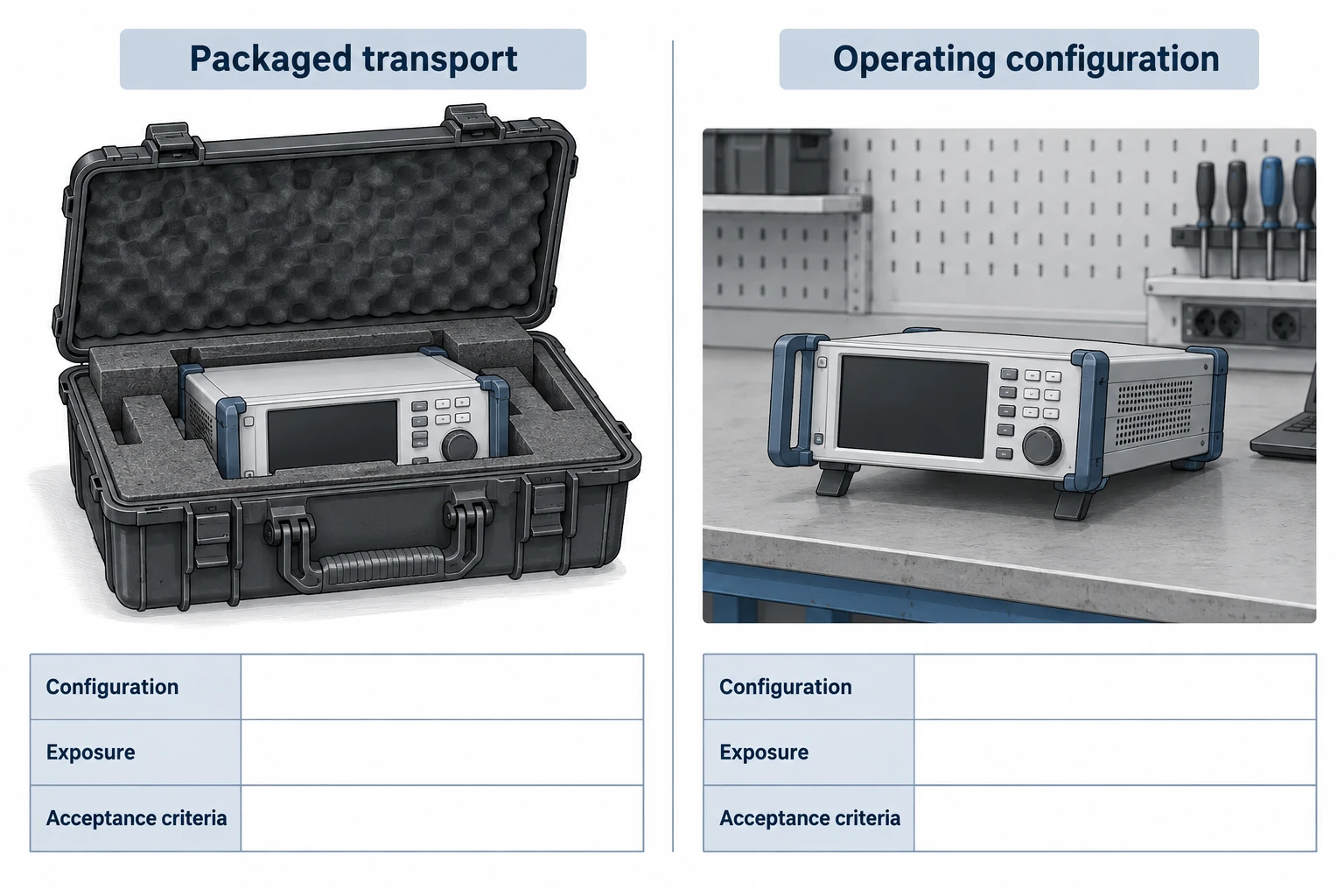
| Test configuration | Was the product operating, stored, unpacked or inside its shipping package? |
| Acceptance criteria | What result counted as acceptable for each function or physical condition under the specified exposure? |
| Recorded result | What passed, failed, changed or required explanation? |
These questions help read a report; they do not substitute for selecting the applicable engineering test programme. The relevant design and test personnel must define that programme for the actual equipment.
A shipping case and an operating instrument are different specimens
Imagine two supplier summaries. One describes an instrument secured inside a foam-lined case during transport evaluation. The other describes the instrument operating on its own. Even if both mention the same standard, they answer different questions. The first configuration includes the package; the second does not.
Record exactly what was present: case, insert, closures, accessories, mounted parts and equipment revision. If the package changes later, flag the change for evaluation rather than assuming the original result still describes the new combination. Likewise, a case result should not be presented as proof that every instrument placed inside it has the same protection.
Read the report beyond the pass statement
Request the report identifier, date, laboratory, specimen identification and test summary. Look for the relationship between the claimed product and the tested revision. Then review deviations, observations and the stated assessment criteria. A summary that excludes those details may be useful marketing material, but it is insufficient to compare two products confidently.
For example, if one assessment concerns physical damage after transportation and another concerns operation during an exposure, their “pass” statements are not interchangeable. Put each result beside its stated purpose before deciding whether it answers your purchasing question.
Keep environmental protection and ESD handling distinct
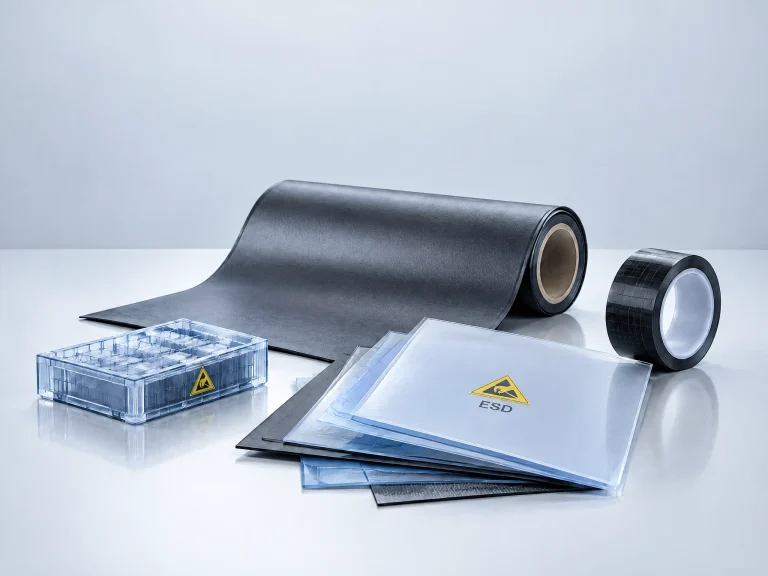
Environmental test evidence does not automatically establish an electrostatic-control claim for a container. Conversely, an ESD handling product does not automatically meet a chosen environmental test programme. CH-ESD’s ESD boxes for storage and transfer can be considered for component handling, with any additional packaging requirements specified separately.
A clear supplier request therefore names the equipment, the packed or unpacked configuration, the expected environment and the evidence needed. Ask for the report supporting that configuration rather than requesting an undefined “MIL-STD-810H-certified box.” This keeps the purchasing decision tied to a demonstrable result and prevents a broad label from replacing the details that actually matter.