

When protecting delicate electronic parts, conventional shielding bags have always been the standard solution in the electronics industry. However, with increasing knowledge and accessibility of cutting-edge ESD proof packaging, ESD corrugated box has emerged as a formidable competitor. This article gives a detailed analysis of whether the ESD corrugated boxes could actually substitute the shielding bags, examines their distinct features, and helps you make an informed decision on which idea works best for you.
What is an ESD Corrugated Box?
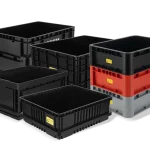
An ESD corrugated box is a kind of packaging that is uniquely designed to guard against electrostatic discharge (ESD) damaging sensitive devices. These boxes are usually made from anti-static or conductive polypropylene hollow sheets and feature corrugated construction for added physical strength and safety against static electricity discharge. ESD corrugated boxes do this unlike typical packaging materials, which can only build up electricity without releasing it during handling, ensuring that contents stay protected.
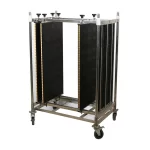
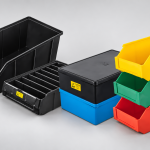
ESD corrugated boxes come in many versions, including ESD hollow plate containers, ESD corrugated boxes with partitions, and PP hollow sheet anti-static reusable boxes. These practical packing solutions can be adapted according to the specific needs of the packaging in terms of shapes, sizes, and logistics, which makes them more and more widely used by PCB, semiconductor, and electronic component manufacturers.
Understanding Shielding Bags and Their Traditional Role
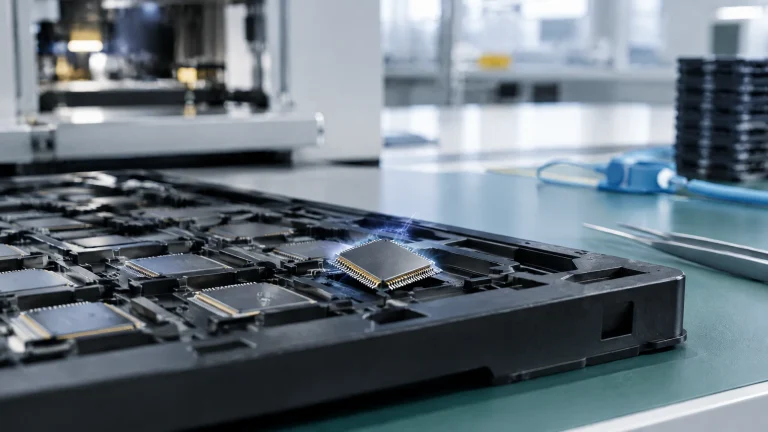
Shielding bags, also known as static shielding bags, are widely used in the electronics sector for safeguarding delicate parts against both the outside static field and direct electrostatic discharge. Shielding bags are usually made of multifunctional materials such as outer dissipative polyethylene layer, inner static-dissipative layer, and a conductive metal layer. Thus, shielding bags perform like Faraday cages, allowing to wrap a device in a grounded area and to keep it safe from static electricity reaching the inside of the bag.
The lightweight, transparent shielding bags are valued as a practical solution for packaging static-sensitive products, especially in small quantities where low-cost and space economy are a must. For several decades, they have been the preferred option for shipping integrated circuits, transistors, resistors, memory chips, and similar important parts.

Comparative Analysis: ESD Corrugated Box vs. Shielding Bag
In contrast to shielding bags, ESD corrugated boxes, made from antistatic PP hollow sheets, are focused on the dissipation of direct electric discharge, while shielding bags provide a significant level of safety against electrical charge and electric field impact due to the metallic layer. The characteristics of shielding bags are lightweight, flexibility, and the ability to be used for either one unit or a few pieces providing considerable protection against electric discharge but little mechanical safety. Oppositely, ESD corrugated boxes are not flexible and are providing better mechanic durability, customization possibilities including dividers and foam fillings for bigger and ordered shipping. ESD corrugated boxes can be reused and are thus environmentally friendly and economically reasonable.
ESD Corrugated Box with Dividers: Added Benefits for Organization and Protection
An outstanding characteristic of modern ESD packaging boxes is the capability to insert dividers to convert a basic carton into an organized and compartmentalized means of storage and transport. While using ESD box with dividers preserves the anti-static properties of the box, it also prevents the items from bouncing, colliding, and producing static through friction.
Dividers can be adapted into numerous sizes and cell arrangements, accommodating diverse product sizes–from small SMD devices to larger PCBs. This assistance for logistics teams helps prevent losses, confusion, and extra handling—essential to traceability in electronics advanced manufacturing.
ESD corrugated boxes with dividers, when combined with static neutralizing foam or conductive cushioning, provide triple protection, which encompasses mechanical isolation, anti-static properties, and efficient partitioning.
PP Hollow Sheet Antistatic Turnover Box: Sustainable, Cost-Effective Packaging
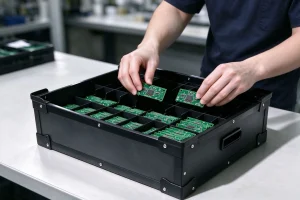
A certain kind of ESD corrugated box, the PP hollow sheet antistatic turnover box, provides a unique combination of durability, lightness, and environmentally-friendly. Made using polypropylene copolymer material, the hollow structure provides excellent compressive resistance, moisture resistance, and chemical resistance properties along with excellent ESD characteristics.
Turnover boxes are engineered to facilitate a number of return rides between suppliers and assembly plants or among different production locations. Features that contribute convenience to their design include simplicity of structure, stacking capability, and versatility of interior arrangements resulting in the improvement of efficiency and the possibility of running logistics operations according to standardized practices. This, on the one hand, helps to reduce the cost of packaging, and on the other hand, minimizes a company’s eco-mistakes.
It is increasingly important for companies seeking both enhanced ESD protection and green solutions to use PP hollow sheet anti-static sorting boxes.
Making Your Packaging Decision
The choice between a shielding bag and an ESD corrugated box is based on your workflow, the level of physical and ESD protection you need, your cost considerations, and your commitment to sustainability.
When you regularly ship small amounts of valuable sensitive parts, shielding bags are reliable products. Whereas if your business involves some form of in-house transport, constant handling, permanent storage, or green initiatives, ESD corrugated boxes are your best bet that is becoming more popular with electronics firms around the world.
To ensure maximum safety, several companies choose to take both precautions – to put components in safety bags and then packages made of ESD cardboard for the process of shipping and storing.
Ultimately, it can be concluded that ESD corrugated boxes represent a highly flexible and adaptable packaging solution which can often replace the traditional shielding bags when physical strength, reusability and organization are required. So, whenever your business is either ramping up production or trying to optimize logistics, make sure that you consider your packaging requirements carefully and consult trusted suppliers about obtaining an ESD system that will help you achieve the most reliable, eco-friendly, and economical results possible.