

Electronic components need more than shelf space. They need storage that protects them from electrostatic discharge, supports accurate identification and keeps production materials easy to access. Anti-static storage solutions are designed to meet these needs in warehouses, production areas, cleanrooms and maintenance departments.
Choose storage around the application
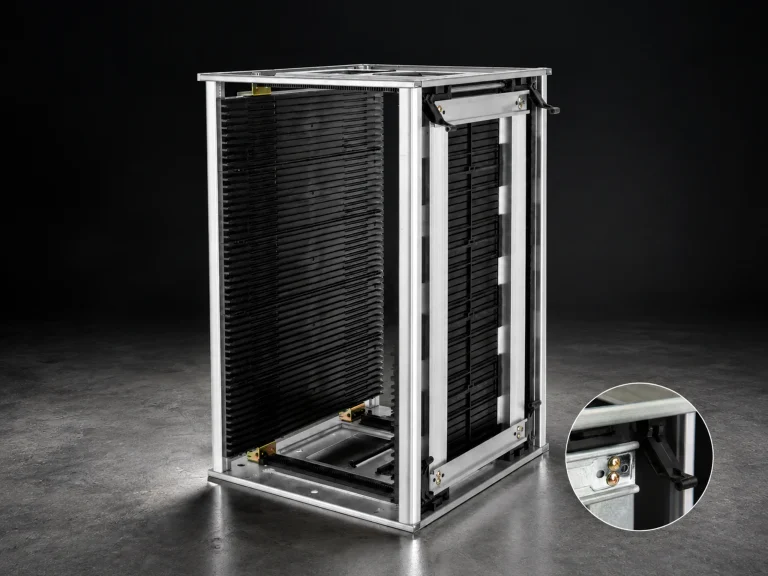
Different components require different handling methods. Small parts may be best managed in conductive bins or compartment boxes, while PCB assemblies often need dedicated trays, magazine racks or mobile trolleys. Selecting the right format helps protect the item while improving the speed of picking, replenishment and transfer.
Make protection visible and repeatable
An organized anti-static storage system creates a clear process for the team. Standardized boxes, labeled locations and defined material routes make it easier to recognize ESD-sensitive inventory. This is especially useful when several departments share materials or when components move between receiving, production, inspection and packing areas.
- Use stackable ESD bins for small components and frequently used materials.
- Use anti-static trays and magazine racks to separate PCB assemblies safely.
- Use ESD trolleys for protected transport between workstations and storage zones.
- Pair storage containers with clear labels to support inventory control and traceability.
A scalable approach to material management
Anti-static storage can be expanded step by step. A manufacturer may begin with protected bins at critical workstations, then add racks, trays and mobile handling equipment as production requirements grow. This approach makes it possible to improve protection without disrupting established workflows.
For electronics manufacturers, the value of anti-static storage is both protective and operational. It helps safeguard sensitive parts, supports a tidier production environment and gives teams a practical foundation for reliable material management.