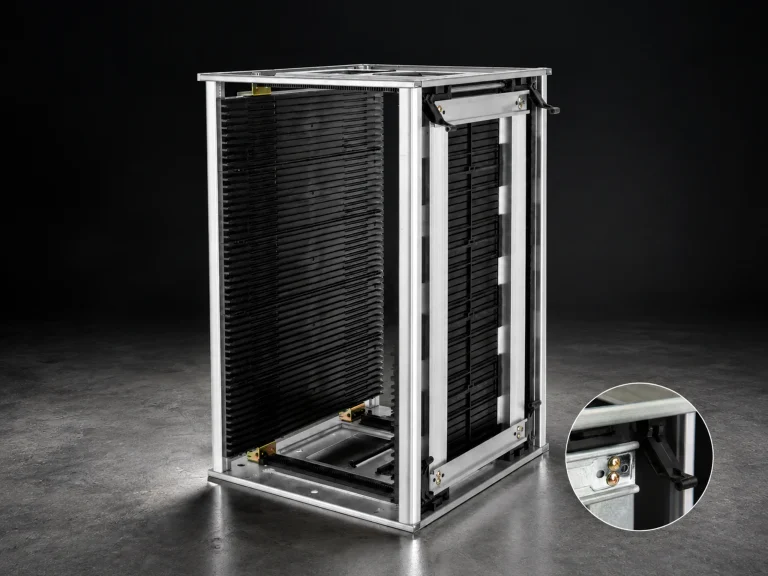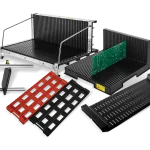


Choosing ESD storage totes for electronics components starts with the work the container must support. The right option depends on the component size and sensitivity, how often operators access it, whether it stays at a workstation or moves through the plant, and what your ESD-control procedure requires.
For a purchasing team, the practical goal is to define the configuration before requesting a quote. Use the selection points below to compare an ESD tote or bin, then confirm the exact material, dimensions, and test documentation for the configuration you plan to buy.
1. How ESD Storage Totes Fit the Component and Access Pattern
Start with the inventory, not the container name. A tote for small loose components has a different retrieval problem from a container used for packed kits, larger subassemblies, or parts that must remain separated by value, lot, or process step.
| Working condition | Selection question | Feature to verify |
|---|---|---|
| Small parts stored by SKU or lot | Can the operator identify and retrieve one item without mixing nearby stock? | Usable internal size, label area, and divider compatibility |
| Frequent line-side picking | Can the contents be reached quickly while the tote stays in its assigned location? | Front opening, open-bin access, or another access format suited to the station |
| Less frequent controlled storage | Does the container need to stay closed or protected between withdrawals? | Lid or closure configuration, stacking arrangement, and label visibility |
| Parts with different handling rules | Can each group remain physically separated and traceable? | Separate bins, drawers, dividers, and a documented labeling method |
Measure the item envelope rather than relying on the nominal product name. Record the largest component or package, the clearance needed for hand access, and whether the contents need protective secondary packaging. The buyer should also decide whether the tote will be replenished from the front, top, or both. That choice affects the best format more than a general “large” or “small” label.
2. Choose the access and organization format
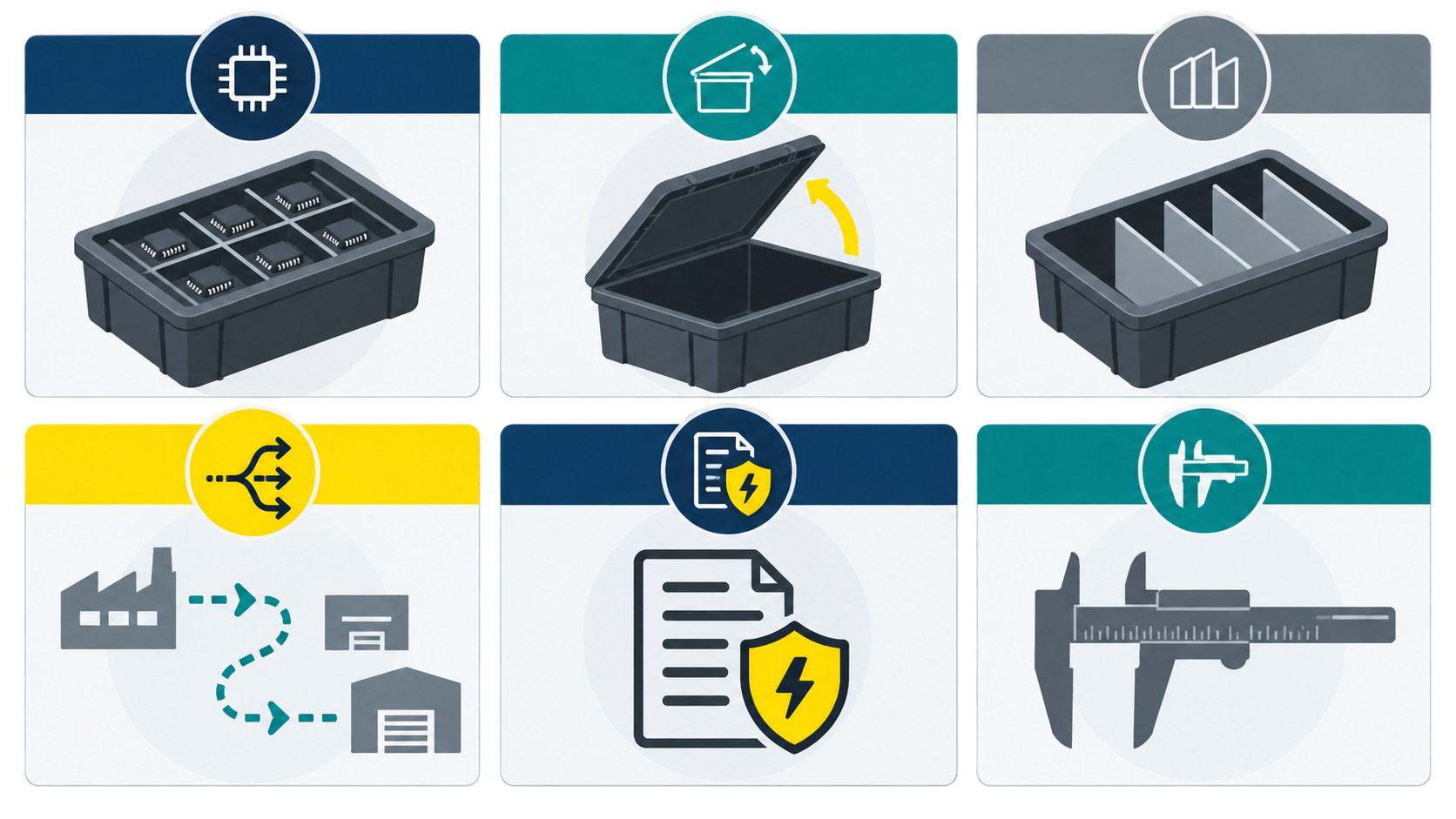
“ESD storage totes” covers several practical arrangements. An open component bin makes the contents visible and easy to pick. A front-opening bin can suit a rack or shelf where the front face is the normal access point. A drawer format can help separate small groups when operators need a contained pull-out location. A lidded tote can be appropriate when the storage route requires a closed container between handling steps.
These formats solve different workflow problems. Do not select a lid simply because it sounds more protective, or an open bin simply because it is faster to access. Check where the container will sit, how operators reach it, and what could fall, mix, or become difficult to identify during replenishment.
- Open access: useful when visual identification and repeated picking are the primary tasks.
- Front access: useful when the container is placed on a shelf or rack and the front is the normal reach path.
- Drawer access: useful when small inventories need a defined compartment and a contained retrieval motion.
- Closed access: useful when the process requires a lid or closure to remain in place during storage or movement.
Dividers deserve their own decision. They can reduce mixing, but they also consume usable space and may change how the operator removes the part. Ask whether dividers are supplied with the chosen configuration, whether they can be repositioned, and whether their material and contact with the stored item are documented. If the answer is unclear, treat the divider as a separate line item in the request.
3. Separate storage from movement through the plant
An ESD storage tote that stays in a controlled storage location has a different route from one that travels between receiving, kitting, SMT, inspection, and assembly. Map the actual path before selecting the container. Note handoffs, shelf or rack placement, carts, packing stations, and any point where the tote leaves the designated ESD-controlled area.
This route determines which questions belong in the purchase record. Confirm the container’s intended use with the site ESD coordinator, especially when the tote will be used outside an EPA or during transport. The EOS/ESD Association describes packaging properties and test methods for protecting electrostatic-sensitive items through production, transport, and storage in ANSI/ESD S541. The standard is a reference for the program and packaging decision; it does not certify an unspecified product configuration.
Use the same discipline for terms such as “ESD safe bins.” That phrase can describe a search category, but it does not replace a material classification, test basis, or handling procedure. The procurement record should state where the tote will be used, what it will contain, and which documents the supplier must provide for that use.
4. Build a supplier-ready specification request
A clear request lets a supplier recommend a configuration without forcing your team to infer missing details from a product photograph. Include the following fields for each tote or bin position:
- Contents: component type, largest package or part envelope, approximate quantity, and whether parts are loose, bagged, boxed, or nested.
- Access: top, front, drawer, or lidded access; withdrawal frequency; and whether one-hand retrieval is required.
- Organization: divider layout, label position, SKU or lot separation, and replenishment method.
- Route: fixed shelf, line-side station, cart, rack, receiving area, or repeated movement between departments.
- ESD evidence: material classification, test method or test basis, applicable packaging documentation, and any conditions attached to the result.
- Mechanical information: external and internal dimensions, usable volume, load or stacking information, and the support surface where relevant.
- Commercial fields: quantity by configuration, packaging for shipment, identification marks, and the revision or date of the supplied specification.
Only the supplier can confirm configuration-specific values. Keep the request precise enough that “ESD storage box” or “ESD tote” does not become a substitute for a real part number, drawing, or documented option. If the tote is intended for a regulated or customer-controlled process, route the evidence through the person responsible for that process before approval.
5. Review the ESD Bin family after defining the use case
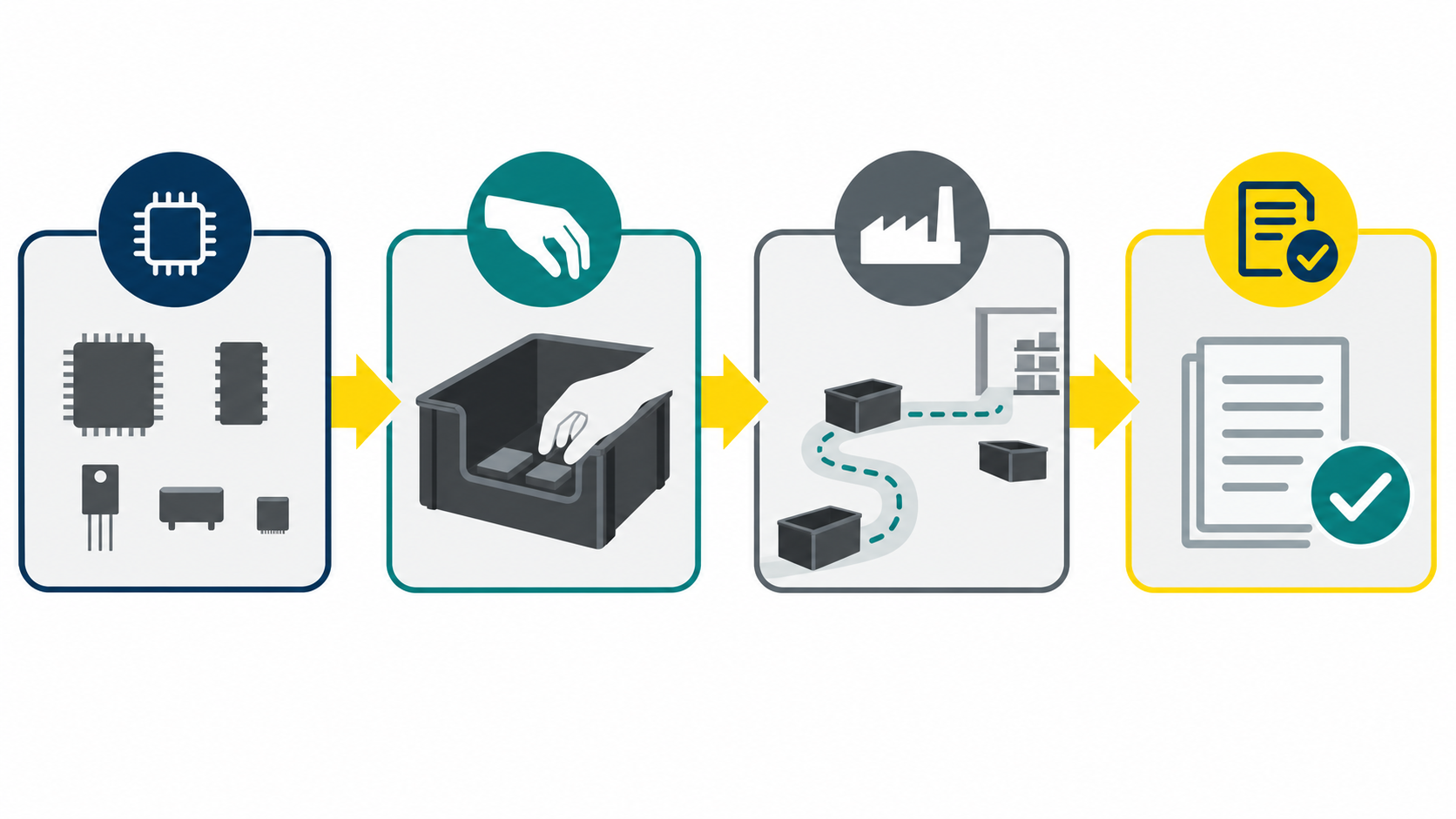
Quan Dun’s verified ESD Bin page is the appropriate next stop for reviewing the available product-family formats. The page lists ESD Component Bin, ESD Component Bin With Drawer, ESD Front-Opening Component Bin, and ESD Round Component Bin categories. Use those labels to narrow the access and organization format, then request the dimensions and documentation for the specific configuration that matches your inventory and route.
For a first inquiry, send the component envelope, access preference, divider or lid requirement, storage location, movement route, quantity, and required evidence together. That gives the supplier a usable brief and gives your team a clear record of why the selected ESD storage tote fits the process.
References
- EOS/ESD Association: ANSI/ESD S541-2026 — packaging properties and test-method reference for electrostatic-sensitive items through production, transport, and storage.
- EOS/ESD Association: ESD Fundamentals, Part 3 — background on ESD-control procedures and packaging material categories.
- IEC 61340-5-1:2024 — general requirements for an ESD control program across handling, packaging, transport, and related operations.