

Polyester is a family of synthetic polymers used to make fibers, fabrics, films and molded products. In everyday textiles, the word usually refers to polyethylene terephthalate, or PET. A polyester shirt and a polyester cleaning wipe can share a basic polymer family while serving very different jobs.
To understand what polyester is, separate three questions: what the polymer is made from, how it becomes a textile, and what the finished item has actually been designed and tested to do. The fiber name answers the first question. It cannot, by itself, settle the other two.
What is polyester made of?
PET belongs to the polyester family. The NCBI material definition identifies it as a polymer formed from terephthalic acid, or its esters, and ethylene glycol. These building blocks form long polymer chains; the resulting material can be processed into different physical forms.
This explains why “polyester” can appear on both a fabric label and a packaging description. The shared chemical family does not mean the products have the same structure, thickness, surface treatment or suitability for a particular application.
It also explains why the name is less specific than a complete technical specification. A fabric order should identify its fiber composition and construction. A molded-product order needs the relevant resin grade and finished-part requirements. Copying a textile description into a plastic-part specification leaves important questions unanswered.
For a buyer, the useful next question is therefore not simply whether an item contains polyester. It is which polyester product is being offered, in what form, with what supporting documentation. That distinction becomes especially important when two suppliers use the same short material name for visibly different items.
From polymer to filament, yarn and fabric
Polyester can be melt spun: molten polymer is formed into continuous filaments. In a staple-fiber route, the filament bundle is processed through steps such as drawing and crimping, then cut into fixed lengths. Indo Rama describes this route for its polyester staple fiber. Continuous filament and cut staple are therefore different fiber forms, even when both use polyester.
Filament yarn uses continuous strands; staple fibers can be assembled into spun yarn. Yarn then becomes a fabric through a construction such as weaving or knitting. A nonwoven follows a different route to a textile structure. Material identity and construction are related, but they are not the same specification.
This distinction helps explain why two polyester textiles can have different surfaces. A continuous-filament description, a staple-fiber description and a finished-fabric construction each tell you something different. Keep those terms intact when comparing the offered materials.
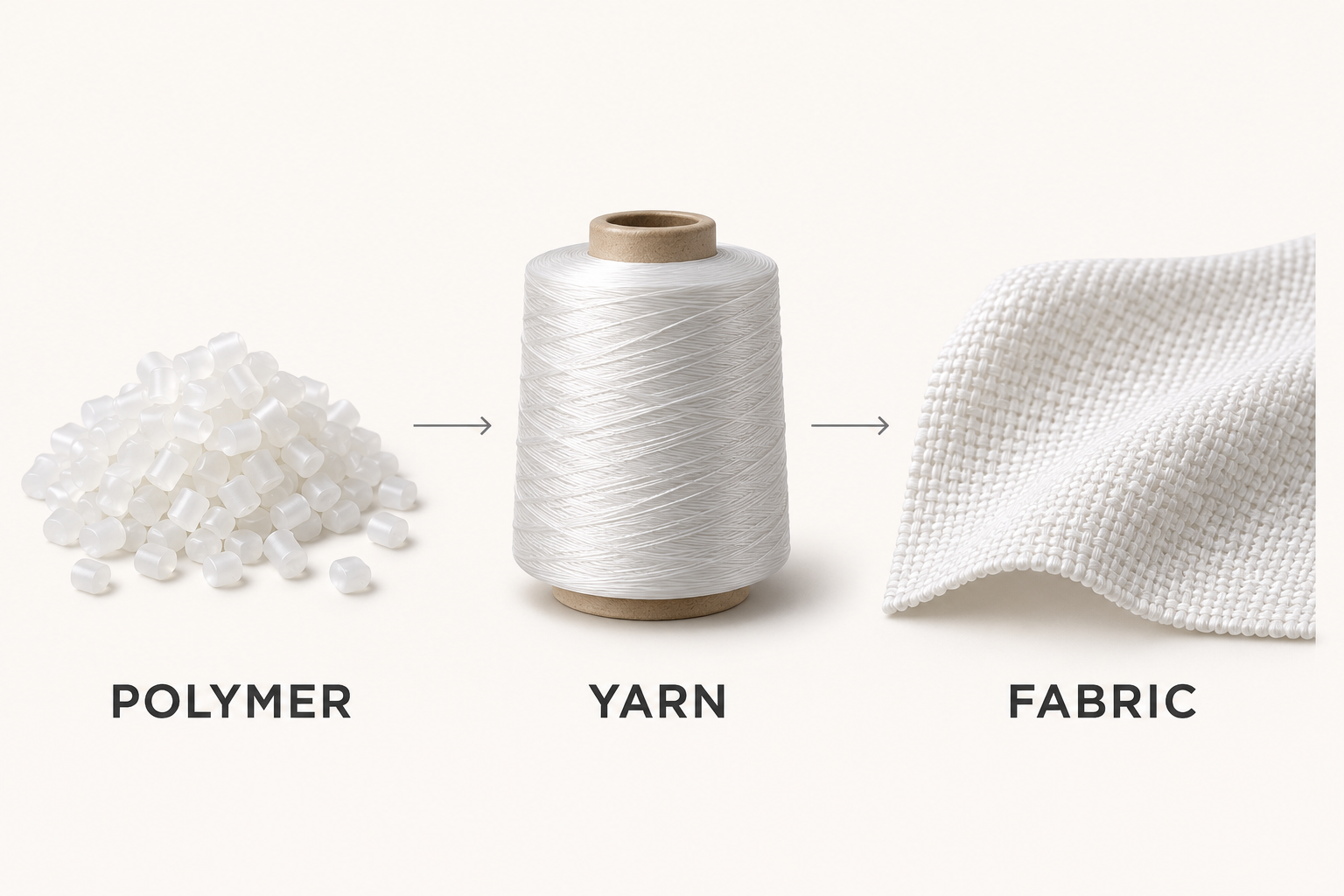
A swatch can illustrate construction and surface appearance, but it does not reveal every part of the specification. Two white samples might differ in yarn structure, finishing, edge treatment or preparation. A photograph cannot establish those differences reliably; a named construction and a corresponding sample are more useful.
When comparing quotations, keep the level of description consistent. Comparing a generic polyester fiber name with a fully specified finished wipe is not a like-for-like comparison. Ask both suppliers to describe the finished article at the same level, then compare the requirements that matter to its intended use.
A practical identification sequence is material, construction, finished form and application evidence. Each step narrows the decision. Skipping directly from “polyester” to “suitable for our process” removes the checks that distinguish an ordinary textile from a purpose-selected consumable.
Common polyester uses depend on its form
Polyester fibers are used in apparel, blended fabrics and home textiles. Hollow polyester fibers also serve as filling for products such as pillows and comforters. Filament yarn provides another textile form. Indorama’s product information illustrates these uses without suggesting that every polyester grade serves every application.
PET also appears outside fabric, including packaging films and bottles. The shared polymer family does not make a bottle resin, a textile yarn and a finished cleaning wipe interchangeable products. Each form has its own manufacturing and selection requirements.
For an industrial buyer, classify the use before choosing the specification. An apparel enquiry may focus on a finished fabric and care conditions. A filling-material enquiry needs the relevant fiber form. A precision-wipe enquiry concerns a converted consumable, its contact surface and process requirements. The common material name is the beginning of those discussions.
What the material name tells you about performance
Coats describes polyester fibers as having good resilience, relatively low moisture absorption and a tendency to accumulate static charge. These are fiber-reference characteristics, not guaranteed results for every finished fabric. Low moisture uptake is also not the same property as moving liquid through a constructed textile.
For selection, translate broad adjectives into a question you can evaluate. “Durable” should lead to a discussion of the actual wear, cleaning or handling conditions. “Absorbent” needs the liquid and intended task. “Suitable for a controlled environment” needs evidence for the finished item and the relevant use conditions.
| Supplier wording | Useful follow-up question | What the wording alone cannot establish |
|---|---|---|
| Polyester fabric | What is the composition and construction? | Finished-item suitability |
| Quick drying | Under which conditions and with which liquid? | A drying time for your process |
| Low lint | What evidence covers this finished item? | Particle release in every application |
| Anti-static | What property was evaluated, by which method? | A complete ESD protection system |
This is a comparison framework, not a set of mandatory tests. Its purpose is to expose missing information before a purchasing decision. The relevant evidence depends on the application; a decorative fabric and a wipe contacting a sensitive surface do not need the same selection criteria.
Polyester, cotton, nylon and viscose in context
Cotton is a plant fiber, viscose is regenerated cellulose, nylon is a familiar textile polyamide, and PET is a polyester. These descriptions distinguish material families before any comparison of finished fabrics. Coats provides the fiber-reference context.
Material comparisons are useful when the comparison keeps the task constant. A general statement that one fiber is “better” usually hides several different decisions: appearance, feel, handling, liquid interaction, care or process suitability.
Start with the reason for considering an alternative. If a buyer wants a different surface feel, compare finished samples. If the concern is wiping performance, define what must be removed and what must remain unchanged. If the concern is a material claim, compare the fiber declarations rather than judging composition by touch.
Do not treat a fabric blend as though it were a pure-fiber specimen. The declared components and their proportions describe composition, while the finished construction still needs its own description. A material-family comparison can help form questions, but it should not replace evidence for the actual blend being purchased.
Keep commercial priorities visible as well. A fabric that meets the intended function may still be difficult to compare if its specification changes between quotations. An agreed sample identity and revision make later discussions more precise than a general preference for a particular fiber name.
For liquid-handling questions specifically, the existing viscose versus polyester comparison addresses that narrower material decision. The foundation here is to understand what the polyester description establishes before using it to choose between alternatives.
Why a polyester wipe is not simply clothing fabric
A cleaning wipe is a finished consumable selected for contact with a surface and a contaminant. Its material is relevant, but so are its construction, edges, preparation, packaging and intended cleaning medium. A textile that feels pleasant in the hand has not thereby been qualified for a precision-cleaning task.
Quan Dun’s Laser Edge Clean Wiper listing includes a Normal Polyester Clean Wiper family. That is a concrete product reference for discussing polyester in an industrial context. A model-specific purchase still needs the specification that corresponds to the selected item.
Separate the cleaning objective from the static-control objective. Removing visible soil and meeting an electrical requirement are different questions. Neither a white appearance nor a polyester declaration establishes both. Ask for the evidence relevant to each objective rather than letting one marketing term stand in for the whole process.
Likewise, treat a stated product family as a route to an appropriate item, not as permission to substitute any textile in that family. The selected wipe should be evaluated against the actual contact surface, cleaning medium and handling requirements. The approved item description then becomes the reference for future orders.
How to read a material specification
A useful specification links an identifiable item to an identifiable use. The first part should tell a reader what is being supplied. The next part should explain which properties are relevant and how supporting information applies to that item.
- Identity: Record the product code, material description and specification revision together.
- Construction: Identify the finished textile form rather than relying only on the polymer name.
- Use: Describe the surface, liquid, handling or care conditions that drive selection.
- Evidence: Match each important requirement to information covering the offered item.
- Change control: Agree which material or construction changes require a new evaluation.
Keep missing information visible. If a quotation identifies only “polyester,” record that limitation instead of filling the gap with an assumption based on another product. A supplier can then answer a specific question, rather than responding to a broad request for a “better quality” material.
For repeat purchasing, this structure also separates a commercial change from a technical one. A different pack quantity may need an order update. A different textile construction may need a suitability review. The documentation should make it possible to tell which kind of change has occurred.
A worked example: comparing two polyester wipes
Comparing two white polyester wipes
Suppose two quotations both state polyester but show different edges and package descriptions. The material declaration does not resolve the difference. Request the item-specific construction, edge description and evidence relevant to the cleaning task. Compare those documents alongside samples, keeping the intended surface and cleaning medium constant.
For that wipe comparison, keep the product code, specification revision and accepted sample together. A change to construction or edge treatment can then be reviewed against the original task. This single record is more useful than repeating a general preference for polyester on each reorder.
Questions that remain after the fiber name
Does polyester always mean PET?
In everyday textile descriptions, PET is the familiar polyester. Polyester is also a broader material family. If the distinction affects the application, obtain the specific material identification rather than expanding an abbreviated label into an assumed resin specification.
Does a polyester declaration prove ESD suitability?
No. A fiber declaration identifies material content. An electrical requirement needs evidence for the relevant finished item and its use conditions. Keep that evidence separate from appearance, softness and general cleaning claims.
References
- NCBI MeSH: Polyethylene Terephthalates — PET material definition.
- Swavelle: A Guide to Polyester Fabric — textile and other product forms.
- Coats: Know About Textile Fibres — fiber properties and comparison context.
- Indo Rama: Polyester Staple Fibre — polymer-to-staple manufacturing sequence.
- Indorama: Polyester fibers and yarns — apparel, home-textile and filling applications.