

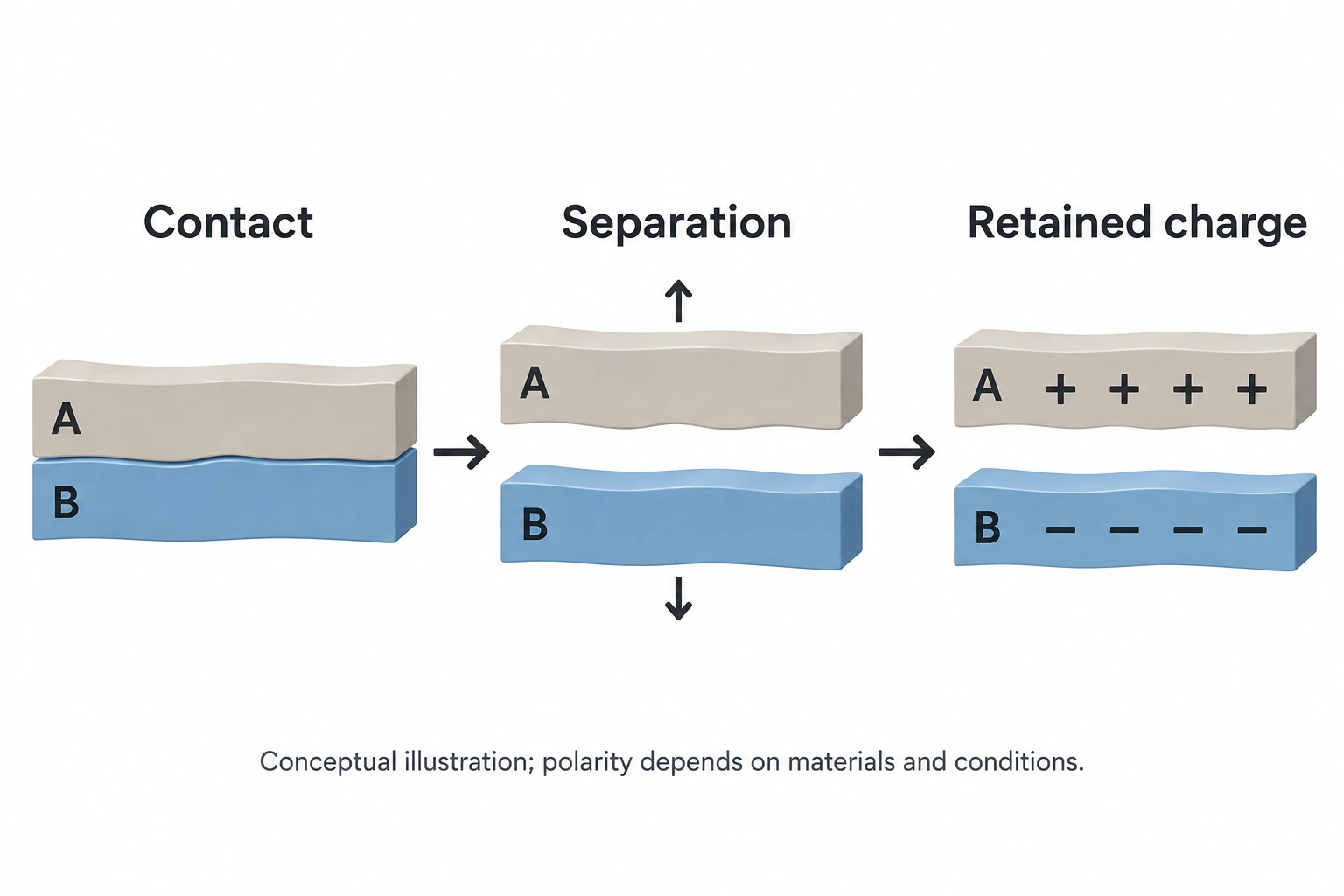
The triboelectric effect is charge generation associated with contact and separation between materials. Rubbing can create repeated contact and separation, but visible friction is not required. Peeling a film, lifting an item from a surface or separating packaging can create a charge-generation opportunity in an electronics process.
For an electronics team, the practical task is to identify those events and determine how charge is controlled before sensitive components are exposed. A material name or an apparently quiet handling operation is not enough to answer that question.
The triboelectric effect: contact, separation and discharge
The EOS/ESD Association explains that contact and separation can leave materials charged. The amount depends on factors including the material pair, contact area, separation speed and humidity. Its guidance also notes that charge generation can still occur at high relative humidity.
Charge generation is not identical to an ESD event. A material can acquire and retain charge before that charge is transferred. Distinguishing generation, accumulation and discharge makes a process review more useful: each stage presents a different control question.
Follow one peel-and-transfer operation
Imagine a hypothetical assembly station where an operator removes a protective film, places the part into a tray and then transfers it to inspection. Reviewing only the final tray misses the earlier separation event. Reviewing only the operator misses the film and the part surface.
Map the sequence in order: what touches, what separates, where the removed material goes and when the sensitive item becomes exposed. Record changes in material, handling speed and work location. This gives the ESD coordinator a defined process to assess rather than a general complaint about static.
The example does not establish that a particular film or tray fails a requirement. It identifies the places where evidence is needed. Evaluate the actual materials and operation using the site’s ESD control programme and appropriate measurements.
Use a triboelectric series as context, not a purchasing specification
A triboelectric series is a way of discussing relative charging tendencies. It should not be treated as a universal voltage prediction for an entire assembly process. The Association’s explanation identifies several process variables, so a list of material names cannot replace evidence from the relevant contact pair and conditions.
For a supplier change, record the material specification and the task it performs. Ask whether the replacement changes the surfaces in contact or the separation step. Two items described broadly as “plastic film” need not be assumed equivalent for a controlled process merely because their catalogue labels match.
Match the control to the problem
| Process question | Control area to evaluate |
|---|---|
| Can an unnecessary charging event be removed? | Material and workflow selection |
| Does charge have an appropriate dissipation path? | Grounding and conductive or dissipative materials |
| Does the process need charge neutralization? | Suitable ionization within the ESD programme |
| How is the exposed item protected during movement? | Packaging and material-handling system |
EOS/ESD Association Part 3 describes these as complementary control approaches. One measure does not automatically replace the others. For example, changing a container does not remove every charging event that occurs before the item reaches it.
Specify the handling system around the component
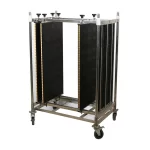
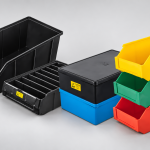
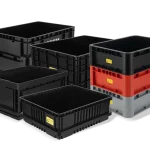
CH-ESD’s ESD storage and transfer boxes can be considered for the storage stage. Select the format around the component, access method and transfer route, then obtain the evidence relevant to the required electrostatic properties. Do not infer every protective property from the colour of a box or the word “conductive.”
Keep a short process record: material pair, contact-and-separation event, sensitive item, existing controls and the observation to verify. When the process changes, revisit that record. This turns the triboelectric effect from a general explanation of static electricity into a specific set of questions for electronics handling.
For repeatable evaluation, identify the operating conditions in the record as well. A useful comparison keeps the changed material or step visible while documenting the other conditions, rather than treating every observation as evidence about the material alone.