

The use of Surface Mount Technology (SMT) is fundamental in the manufacturing process of modern electronics. SMT is applicable not only to smartphones but to all types of modern electronic products. Given the increasing demand for manufacturing at higher speeds and quality, manufacturers are constantly in search of ways to make the manufacturing process more efficient, increase productivity, and reduce downtime. One of the main components of the SMT system that needs to be improving in terms of efficiency is SMT magazine racks. We will analyze how magazine racks can boost productivity on SMT lines and what the increase in efficiency means for the SMT manufacturing process as a whole.
Understanding the Role of Magazine Racks in SMT Lines
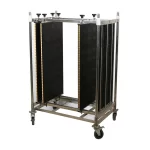
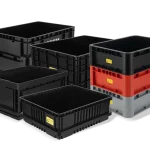
Before analyzing the advantages, it is important to define the term magazine racks and indicate their purpose in the SMT process. Knowing that magazine racks are intended to safely hold PCBs and protect them while they are being transported, processed, and stored is the first and the most important step. Another important fact about magazine racks is that they are made of antistatic substances and, hence, provide protection from electrostatic charges.
The rack systems used in SMT assembly operations are important because they play the role of intermediaries between the different stages of production. They function by transferring printed circuit boards (PCBs) from the loading point to the screen printing stage, placement process, cooking in reflow ovens, various test phases, and unloading. The use of racks in magazine manufacturing helps to guarantee that all boards are transported in an efficient, safe, and orderly way which is necessary for quality production.
The Direct Impact of Magazine Racks on SMT Production Efficiency
SMT magazine racks are responsible for the productivity gain that companies get from reducing the number of manual operations. Various conventional techniques (for example, manual stacking and unmarked containers) significantly slow down the operation and drum processing, as well as add to possible mistakes and dislocation during the process.
Efficiency gains are evident in the following aspects:
1.As PCBs are no longer being loaded and unloaded individually but rather in batches, the time taken for PCB handling has decreased.
2.Integration of the automation equipment for the process of loading and unloading, using a magazine that guarantees smooth production processes while ensuring minimum interference.
3.Since the boards can be buffered whenever one segment of the line is faster than others, line balancing can be improved as bottlenecks can be avoided.
4.The progression of improvements in effective board support and ESD protection at all stages of movement is crucial for achieving low levels of defects.
The efficiency provides significant savings in costs, higher production levels, and a better product quality in mass production.
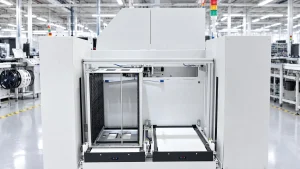
Magazine Rack Loader and Unloader: Boosting Automation in SMT Lines
The traditional function of the rack has been greatly improved with the use of loader and unloader systems. The magazine rack loader unloader helps improve throughput by fully automating the process of PCB loading at the beginning and the end of the SMT procedure.
Automated systems heavily depend on robotic arms or conveyor lines in the lifting of racks filled with printed circuit boards to either direct them down the production line or to carry them through the assembly line. Automation enables the orderly and regular production of printed circuit boards:Reduces manpower requirements and frees up operators for higher-value tasks;Prevents process interruptions and downtime associated with manual magazine swaps;Real-time tracking and monitoring are possible through the use of barcodes or RFID technology applied in racks and handling systems.
The implementation of raceways for loading and unloading magazines is an important part of automation in magazine factories, especially in fully automated factories. This assists in achieving innovative manufacturing principles laid down by Industry 4.0.
Optimizing Line Flow with Buffer and Assembly Racks
In addition to functioning as transport mechanisms for different locations, magazine racks also serve as SMT line buffer racks. This is possible since magazine racks can act as buffer racks that enable partially manufactured printed circuit boards to be kept in place temporarily in situations when the downstream machine is slower than normal, under repair, or offline during that period.
The use of this storage allows the useful machines to continue to function without interruption, increasing the efficiency of the equipment. Buffer racks help with batch processing as well, not only improving the processes and inspection quality, but also making it possible to implement priorities regarding the carrying out of mixed model production.
In the same way, a properly made PCB board rack helps in board assembly by ensuring an organized board storage that is protected from electrostatic damage and made easy for machines and humans to access.
How Magazine Racks Speed Up SMT Line: A Practical Perspective
For companies looking for a quick return on investment, the question remains: how exactly do magazine racks accelerate the SMT manufacturing process?
The support of magazine racks as a first and most significant point allows for the employment of simultaneous processes. When there are products in the reflow oven, another batch can be prepared for quality assessment and yet another batch can be organized for packing at the same time. The simultaneous workflow reduces idle time by ensuring functioning of all equipment at full capacity.
In addition, magazine racks allow for quick transitions. The multi-slot configuration means that robotics or operators can change between different types of printed circuit boards without having to change racks which facilitates both low-volume & large-volume production.
Finally, racks allow for traceability. Barcodes, RFID tags, and digital log systems can be placed directly on the racks so that constant monitoring and errorproofing throughout the SMT process can be achieved. This is vital for quality control, compliance with regulations, and determining the causes of defects.
In conclusion, the simple magazine rack is much more than just an ordinary storage item. It is a valuable contributor to the performance of SMT. Companies can achieve superior results in the battlefield of the demanding marketplace by using carefully chosen and maintained magazine racks which give the needed advantage in delivery times, defects rates, and product quality.