
Before releasing a bulk order for ESD shoes, trial the exact candidate on the floors where people will wear it. A shoe data sheet describes a product. Your purchasing decision concerns a person wearing that footwear on a particular flooring system. Those are different pieces of evidence.
Start the pilot after you have a shortlist and supplier sample. Its output should be a release decision for a named shoe and floor combination, a request for missing evidence or a decision to test a different candidate. It need not repeat the entire footwear selection process.
Define the decision before ordering sample ESD shoes
Choose a real work area and identify each floor the operator crosses while handling exposed components. Record the floor type, its maintenance condition and the current grounding approach. If two work areas have different finishes, keep them separate in the trial record even if both are called “the electronics line.”
Ask the supplier to identify the exact style, sole construction, size range, supplied insoles and revision. Record which sample is paired with which worker and floor. A borrowed sample with an unknown replacement insole can be useful for a comfort discussion, but it is a poor reference for an order that will specify a different configuration.
Collect two different kinds of system evidence
ANSI/ESD STM97.1 describes a qualification method for measuring resistance with a person wearing footwear on a flooring system. Its scope is the combination. A shoe-only resistance value cannot stand in for that measurement on your installed floor.
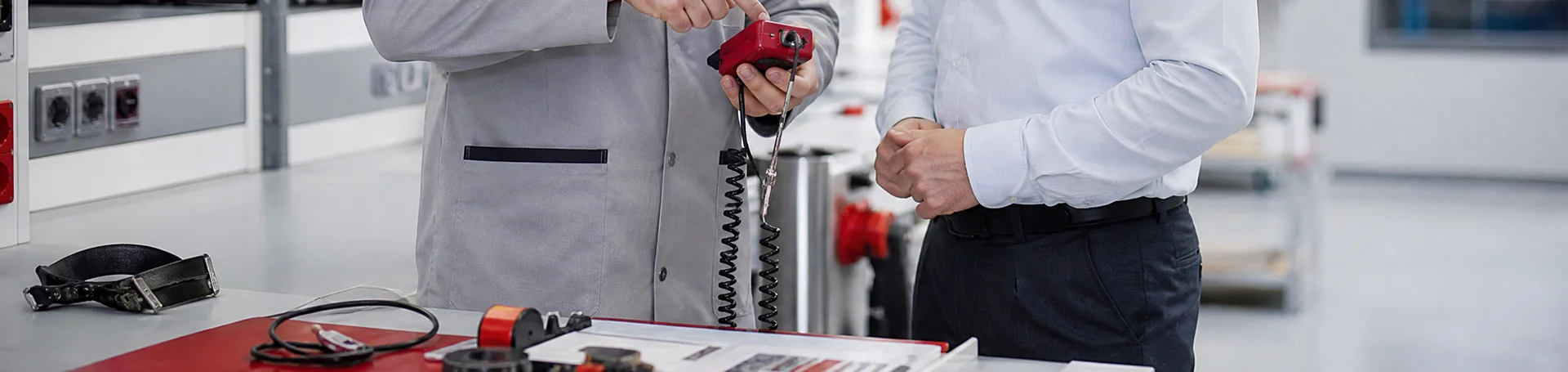
EOS/ESD Association’s control guidance also discusses body voltage generated while walking. Resistance and walking body voltage answer different questions: the first concerns a resistance path; the second concerns charge accumulation during movement. Have the site’s ESD programme owner identify the applicable methods, current criteria and qualified personnel before evaluating candidates.
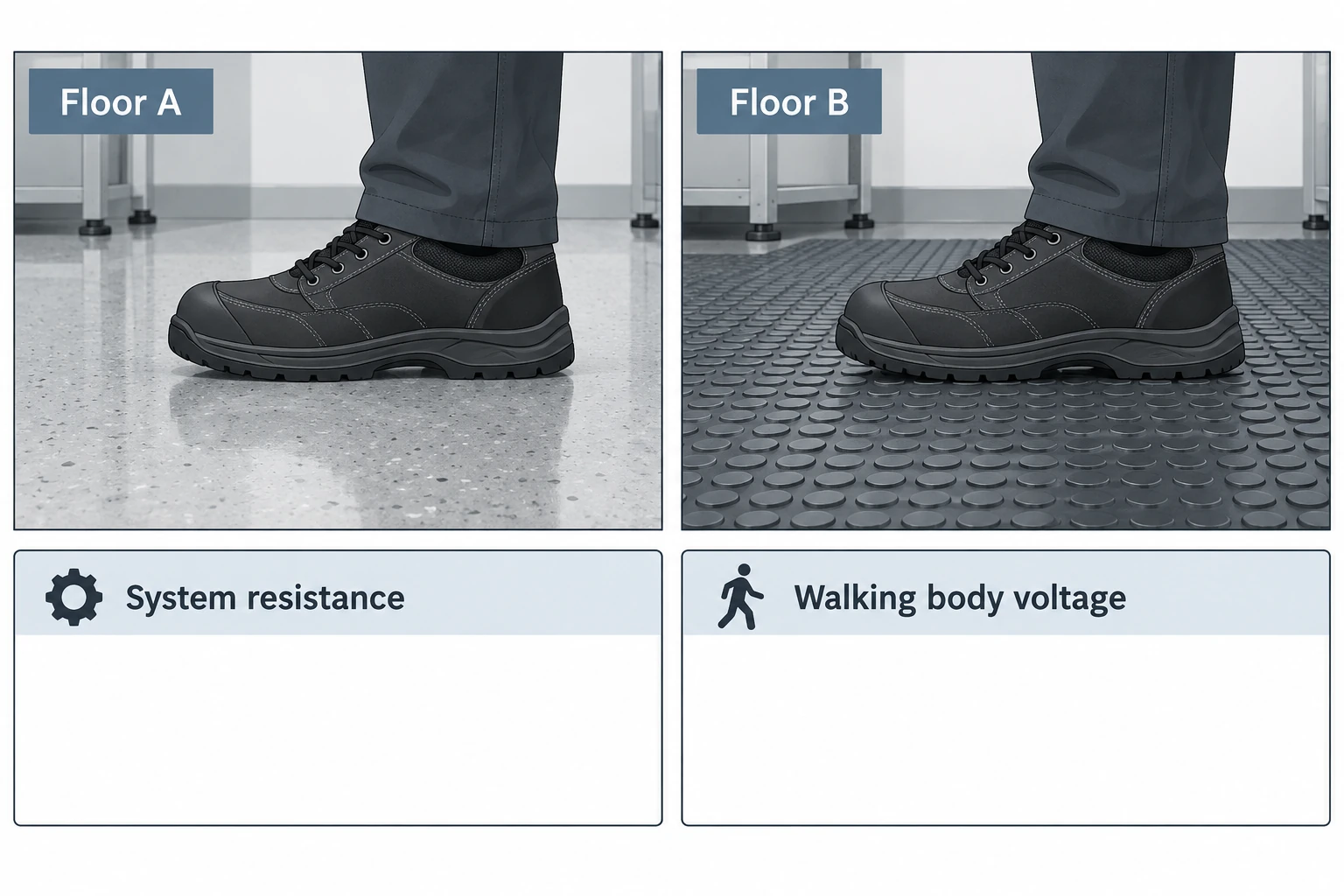
A two-floor pilot: one candidate, two decisions
Suppose a factory is considering one slip-on style for its assembly room and inspection area. These are hypothetical locations. The assembly floor already has relevant qualification records; the inspection floor has a different surface and its maintenance history is incomplete. A single order line may be convenient, but that does not make the evidence interchangeable.
| Location | Pilot record | Purchasing decision |
|---|---|---|
| Assembly room | Exact shoe and insole, floor identification, required system results and wearer feedback | Release for this area only if the responsible team accepts all required evidence |
| Inspection area | Same candidate, different floor; missing maintenance history or incomplete system evaluation | Hold this area until evidence is resolved; do not inherit the assembly-room decision |
No universal sample count or acceptance threshold is implied by this example. The facility programme governs those details. The buyer’s contribution is traceability: knowing precisely which configuration the engineering decision covers.
Record wearability separately from electrical results
Ask participants which size and configuration they wore, whether the shoe stayed secure during the actual work and whether fit problems appeared over the trial period. A comfortable sample can still lack system evidence. An electrically acceptable combination can still be unsuitable for a workforce if the ordered sizes do not fit its users.
Keep any workplace protective-footwear requirements separate as well. An ESD description is not by itself evidence of toe protection or protection against electric shock. Purchasing should obtain the documentation required by the responsible workplace safety team for the separate hazards it has identified.
What goes on the purchase release
Attach the accepted supplier identification, allowed variants, approved locations, record identifiers and the name of the site role responsible for acceptance. Agree with the supplier how construction or insole changes will be communicated. If later deliveries differ from the approved sample, return that difference to the responsible team rather than extending the pilot result automatically.
CH-ESD lists a slip-on anti-static shoe as a possible sample candidate. Request its current specification and sample configuration. The listing identifies a product; only the facility’s evaluation can establish whether that candidate fits the intended floor, work area and purchasing requirements.