
A sensor reading that jumps whenever a nearby motor starts is a useful observation. It is not yet a diagnosis. Electromagnetic interference (EMI) occurs when electromagnetic energy disturbs a receiver’s intended operation. A useful incident report identifies the affected function, a possible source and a way the disturbance might travel between them. Record what happened before proposing a shield or a filter.
Describe the electromagnetic interference at the receiver
“Noise problem” tells the next engineer very little. Compare it with: “During three recorded starts of the drive, the temperature channel reported a brief high reading. The second channel continued reporting normally.” The second version identifies the receiver and the symptom, limits the claim to observed events and gives another engineer something to compare. If a time stamp, log extract or instrument setting already exists, attach it with the device and firmware revision.
Separate a suspected source from a coupling path
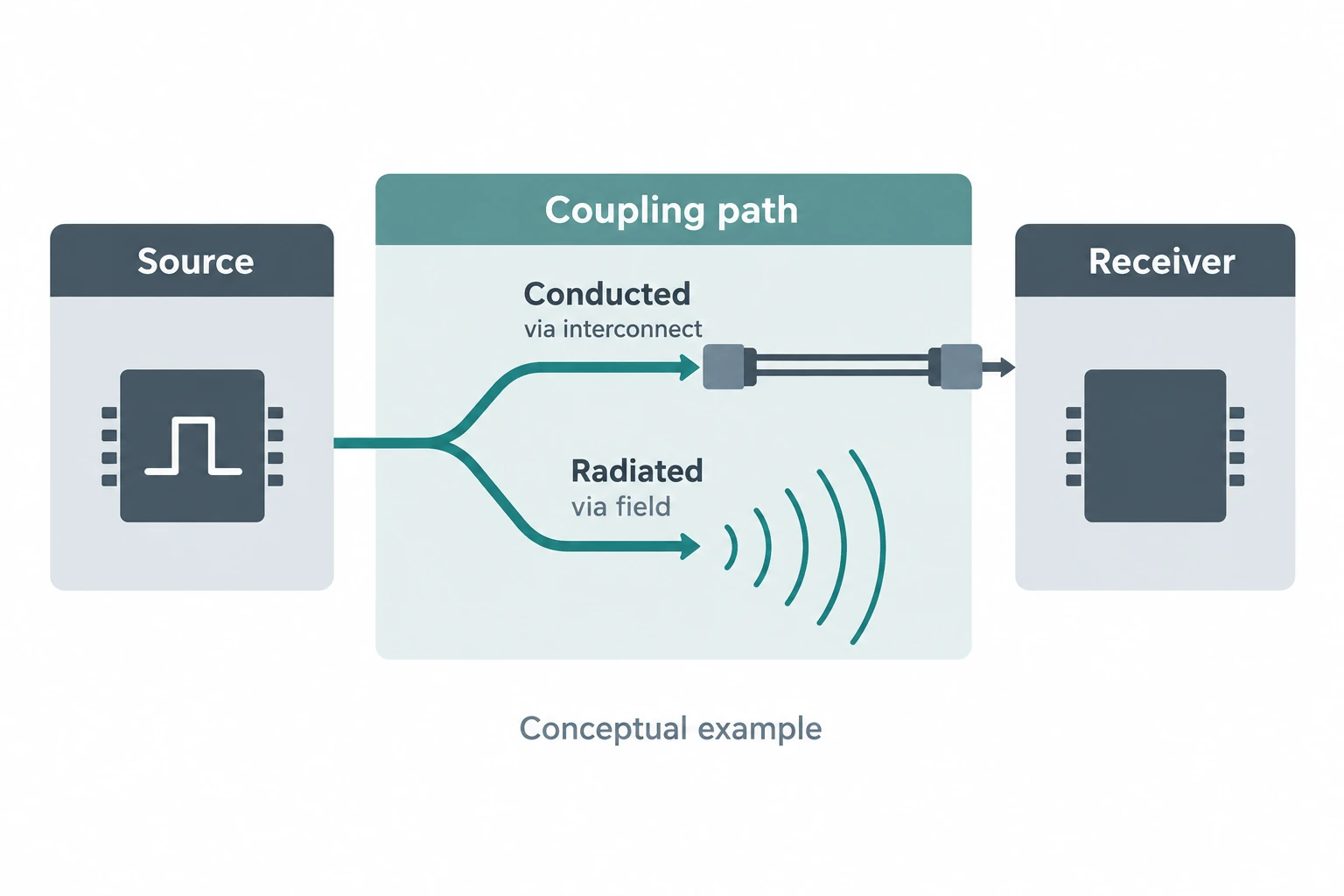
A switching power stage is a plausible source of disturbance. The disturbance could travel on a shared supply or signal connection, or a field could couple into a nearby loop. These are different hypotheses. If engineers confirm interference conducted through a supply connection, they can evaluate filtering on that path; for field pickup in a loop, they can evaluate a layout with less loop area. Naming the motor controller does not tell an engineer which path matters. Analog Devices’ examples of crowded power-supply boards illustrate why physical arrangement and return paths matter even when the schematic connections look similar.
Two records from the same bench
Consider two fictional fault reports involving identical instruments. In the first, the error appears in the sensor log during drive transitions, but only on the unit with a long external harness. In the second, both units show the same incorrect value whenever a particular saved file is loaded, even in a run without a drive transition. Neither report proves root cause. They justify different next requests.
| Record | What to preserve | Question for engineering |
|---|---|---|
| Drive transition and long harness | Event times, harness identity, routing photo, affected channel, unit revision | Does the correlation persist under a controlled comparison of harness configurations? |
| Saved file and repeatable wrong value | File revision, software build, input sequence, unchanged reference run | Does the processing path reproduce the error independently of the proposed disturbance? |
The second report is valuable because it gives a competing explanation. Keep results from unaffected channels and uneventful runs. If a drive started twenty times and the symptom occurred twice, recording only those two events makes the correlation look stronger than the evidence warrants.
Hand off a comparison another person can repeat
Identify the equipment, normal operating mode, attached accessories and the condition immediately before the event. Describe what changed and what stayed fixed. Use separate fields for observation and inference: “display reset” belongs in the first; “disturbance entered the supply cable” belongs in the second until evidence establishes the path. Leave physical changes to the responsible engineering team working under its approved test procedure.
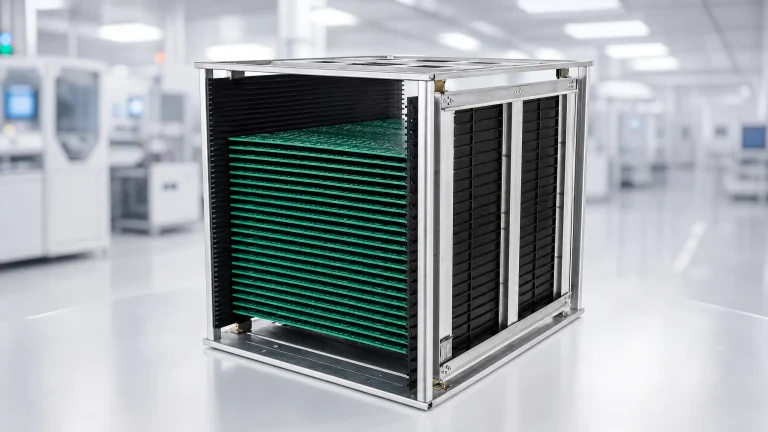
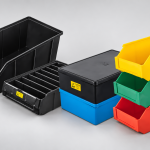
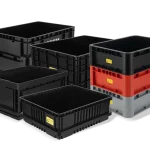
Tag and retain relevant sample boards so the follow-up uses the same revision. An ESD handling box can help preserve a sample during transfer; its static-control purpose does not establish EMI shielding performance. A successful handoff leaves the investigator with an identifiable receiver, a testable explanation and an alternative worth checking.