
IPX7 describes protection against temporary immersion under defined conditions. The X leaves the solid-particle category unspecified. It does not establish dust-tightness, permanent underwater operation, swimming suitability or resistance to every water jet.
For a buyer, the rating is a useful starting point. The next step is to identify what was tested, in what condition, and whether those conditions answer the intended use. Treating the word “waterproof” as the entire specification loses the information that makes the rating useful.
IPX7 is an immersion category
The final 7 concerns temporary immersion, rather than splash or jet exposure. The first position is X because this particular marking does not state a solid-object category. If dust protection matters, obtain the separate declaration rather than assuming that a water-resistant product must also be dust-tight.
The IP code belongs to an enclosure classification system. It is not a declaration that every part of a product can be exposed while open. Covers, ports and accessories need to be in the condition described by the supplier. An unprotected opening can change the question entirely.
Why test conditions matter
The familiar IPX7 benchmark is a 30-minute temporary-immersion test. EMCTEST’s laboratory description distinguishes enclosure size: below 850 mm in height, the lowest point is 1,000 mm beneath the water surface; for enclosures 850 mm or taller, the highest point is 150 mm beneath it. Thus “one metre for thirty minutes” is a useful shorthand for small enclosures, not the complete geometry rule. These are controlled test conditions, not permission to operate equipment underwater or a guarantee for repeated exposure.
An immersion statement is meaningful only with a defined exposure and acceptance assessment. A useful record identifies the sample, enclosure revision, immersion conditions and the product state during evaluation. Those details distinguish a documented result from a general marketing description.
When a supplier summarizes a test, request the conditions behind that summary. Do not convert one stated exposure into an unlimited service-life claim. A test does not reproduce every possible sequence of wear, impact, cleaning and opening that a product may experience.
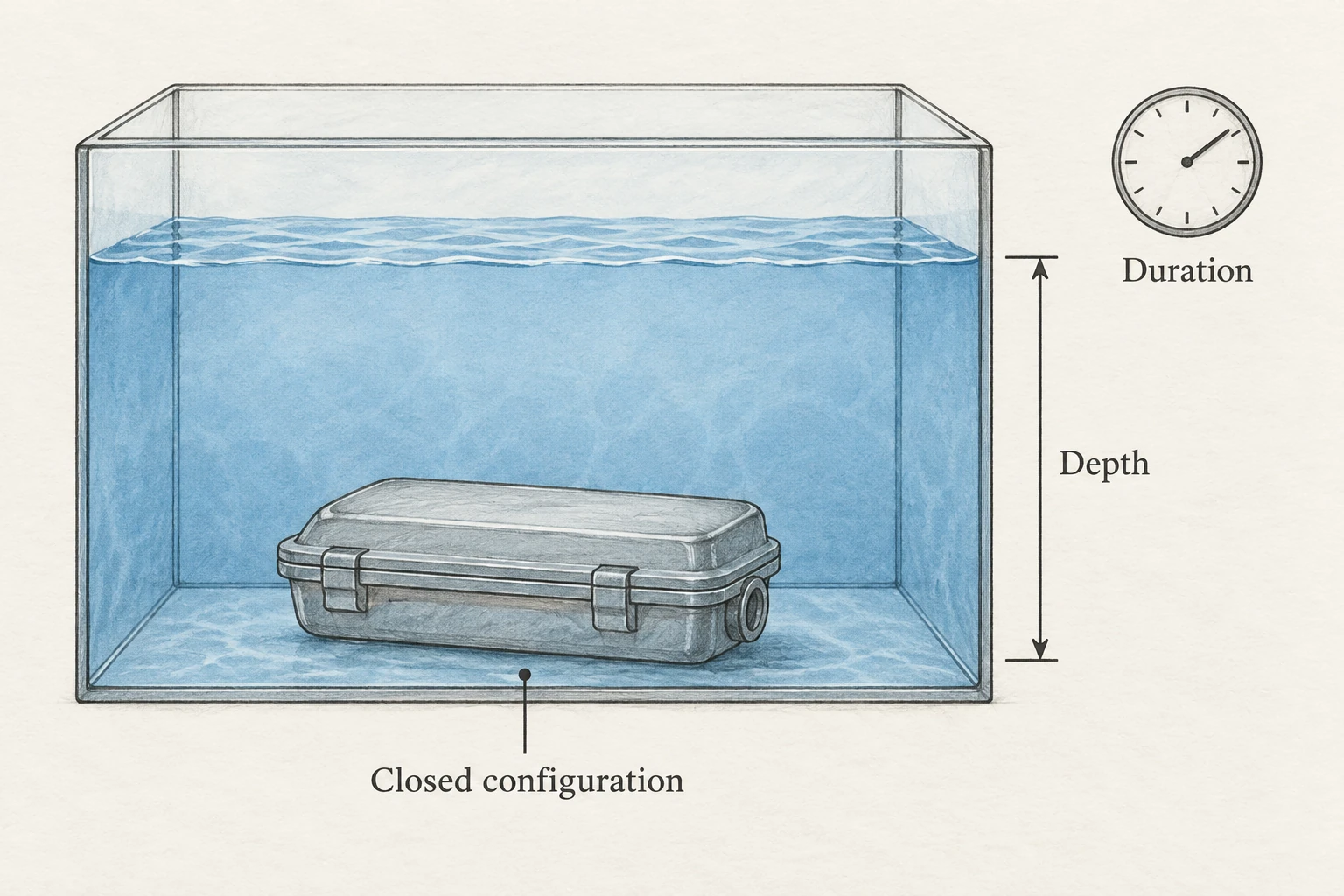
The diagram highlights variables to look for in documentation. It is not a recipe for a home or workshop test. Recreating an immersion exposure without the relevant method and acceptance criteria would not establish the same evidence.
Questions the rating does not answer
| Buyer question | What is still needed |
|---|---|
| Can the equipment operate underwater? | A statement covering intended operation, not merely temporary exposure |
| Can it be washed with a jet? | Separate jet-protection information and cleaning instructions |
| Can it withstand salt water or detergent? | Evidence for the liquid and material exposure involved |
| Is it protected against dust? | A stated solid-particle category; X does not supply one |
| Does the claim apply after modification? | Confirmation for the changed enclosure or accessory configuration |
ABB’s guidance makes an especially useful distinction: immersion protection does not automatically include jet protection. A device can therefore need evidence for both exposures. Selecting by the largest water numeral alone can miss that difference.
An accidental dunk and an underwater task are different
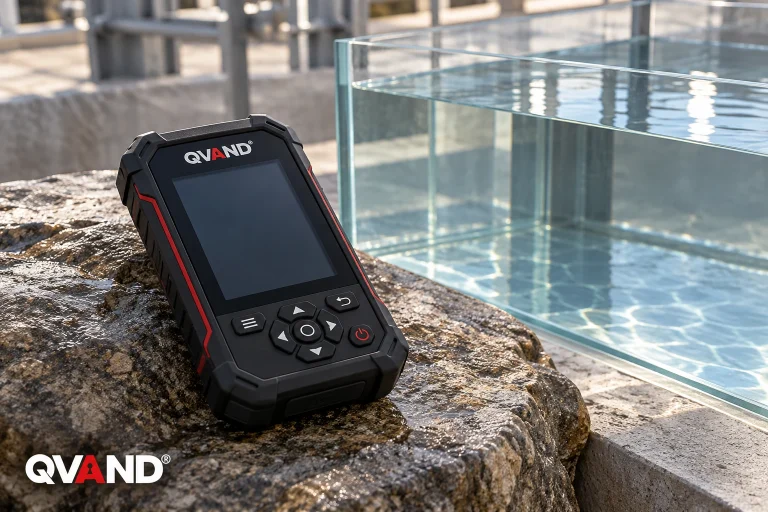
Consider a portable inspection device that may briefly fall into water. The purchase review should compare that foreseeable event with the documented immersion conditions. The operator should still follow the manufacturer’s instructions after exposure, including any restrictions on charging or returning the device to use.
Now consider a sensor intended to remain underwater as part of normal operation. That is a different specification. Depth, time, liquid environment and operating state need to be defined from the task. A temporary-immersion label is not enough to establish suitability for that duty.
These examples do not assign a rating to either device. They show why the intended task must be stated before comparing labels. The supplier can answer a concrete exposure question much more precisely than a request for “something waterproof.”
Separate transport protection from the device rating
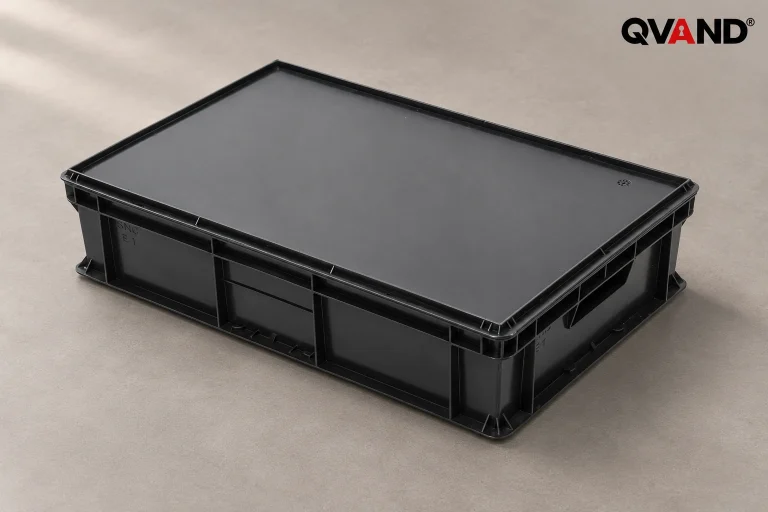
The protection of a finished instrument does not automatically transfer to its packaging. Equally, a storage container should not be described as IPX7 simply because it closes with a lid. The exact product and configuration need their own supporting information.
For electronics handling, CH-ESD’s ESD storage boxes address component storage and transfer. Define the electrostatic, mechanical and moisture needs separately when selecting the complete package. An ESD property is not proof of immersion protection.
A sound IPX7 comparison ends with an identifiable assembly and documented conditions that match the expected temporary exposure. If the actual task involves ongoing immersion, jets or another liquid, put that requirement into the specification rather than stretching the meaning of the existing code.