
Conformal coating is a protective film applied over selected areas of an electronic assembly. It follows the board and component contours rather than filling an enclosure as a solid block. Its usefulness depends on the selected formulation, the surfaces it covers, adhesion and cure—not simply on the presence of a visible layer.
The practical selection problem is to match an environmental need with a production process that can repeatedly protect the intended areas. Connectors, test access and future repair need to be considered at the same time as moisture protection.
Compare conformal coating formulations
Acrylic, urethane, silicone and hybrid formulations represent different starting points. Chemtronics’ material guide illustrates tradeoffs in application, thermal behavior, chemical resistance and repair. Those broad families help narrow the search, but the supplier’s data for the actual product determines the usable process and performance limits.
| Family | Selection discussion | Question for the formulation supplier |
|---|---|---|
| Acrylic | Application and potential rework | How do the specified solvents and environment affect this formulation? |
| Urethane | Chemical exposure and removal requirements | What removal method is compatible with this board? |
| Silicone | Temperature demands and process compatibility | What cure and handling conditions apply to this product? |
| Hybrid or copolymer | Combined properties and application method | Which measured properties justify choosing it for this assembly? |
The table is a set of comparison questions, not a ranking of materials. Two products sold under the same family name can use different formulations and cure systems. A purchasing specification should identify the coating product and revision, not stop at “use silicone.”
Map the board before specifying coverage
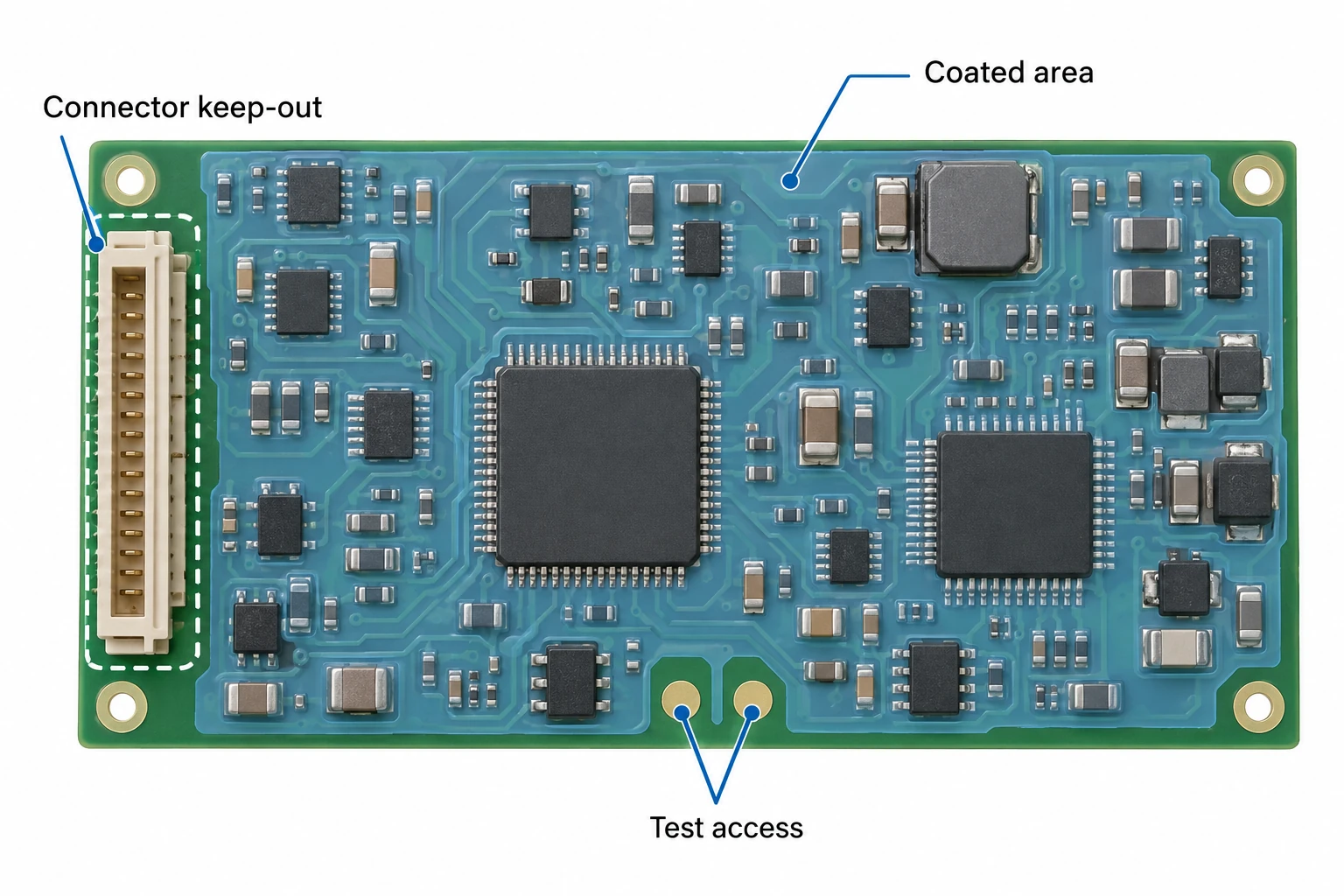
A coating process needs to distinguish areas that require coverage from areas that need access or a clean mating surface. MG Chemicals discusses connector contacts, switches and test points as examples where unwanted coating can interfere with function. Liquid can also move into unintended spaces by capillary action.
For a board with an edge connector and production test pads, a useful drawing identifies three things: the protected circuitry, the connector keep-out and the test-access region. The production team can then assess whether its application process can achieve that separation reliably. “Coat the whole board” is not an adequate substitute for the drawing.
Why thicker is not automatically better
Coatings have specified application ranges. Chemtronics explains that excessive thickness can trap solvent and contribute to bubbles or voids. Thickness must therefore be considered alongside cure and coverage rather than treated as a simple protection dial.
A shiny appearance is not evidence that every critical surface is covered or that the film has achieved its required properties. Likewise, an application setting does not by itself demonstrate the result on a complex board. The inspection method and acceptance criteria should address the actual assembly and coating system.
Suppose one board revision adds a taller component close to a connector. That change may affect both access for coating and the desired keep-out boundary. The sensible response is to review the coverage map and process result for the new revision, not assume that an unchanged coating material guarantees an unchanged outcome.
Plan repair and handling together
Rework needs influence the material decision. If components are expected to be replaced, the team needs a compatible removal and restoration process. That question should be resolved before coating selection, because easier initial application is only one part of the lifecycle cost.
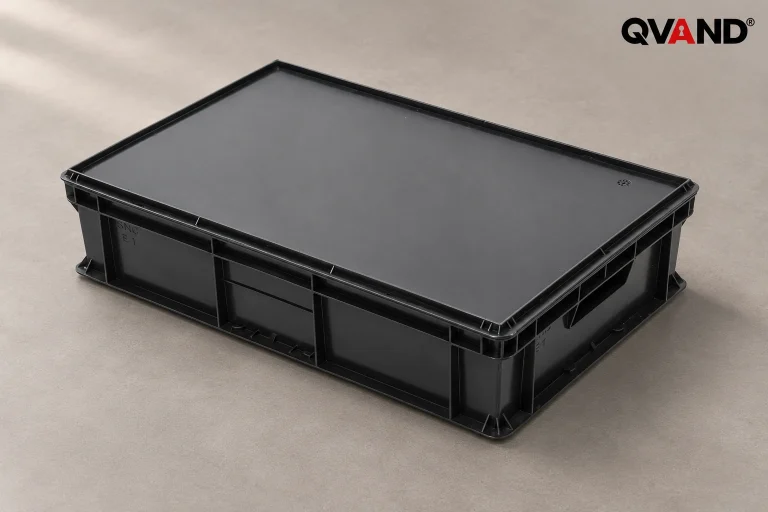
Handling also deserves a defined place in the process. A board should be supported without unwanted contact with its protected areas. During storage and movement, keep component clearance, board-edge engagement and the condition of the coating in view. A storage rack is not automatically an approved curing fixture.
CH-ESD’s PCB magazine racks provide slotted handling formats. Match the board envelope and contact points to the selected rack, and confirm any process exposure separately. The rack category does not establish compatibility with every coating chemical or cure temperature.
What to settle before a production trial
Bring the assembly drawing, environmental exposure, proposed formulation, coverage map and inspection criteria into the same discussion. Add the intended repair route and handling arrangement. These inputs allow the coating supplier and production team to identify gaps before a trial becomes an open-ended search for a visually acceptable film.
The final decision should connect a specific coating to a specific board and a repeatable process. That connection is more useful than a generic claim that coated electronics are waterproof, maintenance-free or immune to electrostatic damage.