
Why is my hair staticky? Hair becomes staticky when contact with a hat, brush, clothing, or another surface transfers electric charge. Strands carrying similar charges can repel one another, producing flyaways. Dry conditions often make the effect more noticeable because the charge does not dissipate as readily.
For everyday hair care, the useful starting points are less repeated friction and a suitable conditioner used as directed. For electronics work, a different question follows: what controls protect the exposed components? A hairstyle cannot answer that question, even when the static is easy to see.
Why Is My Hair Staticky After Brushing or Removing a Hat?
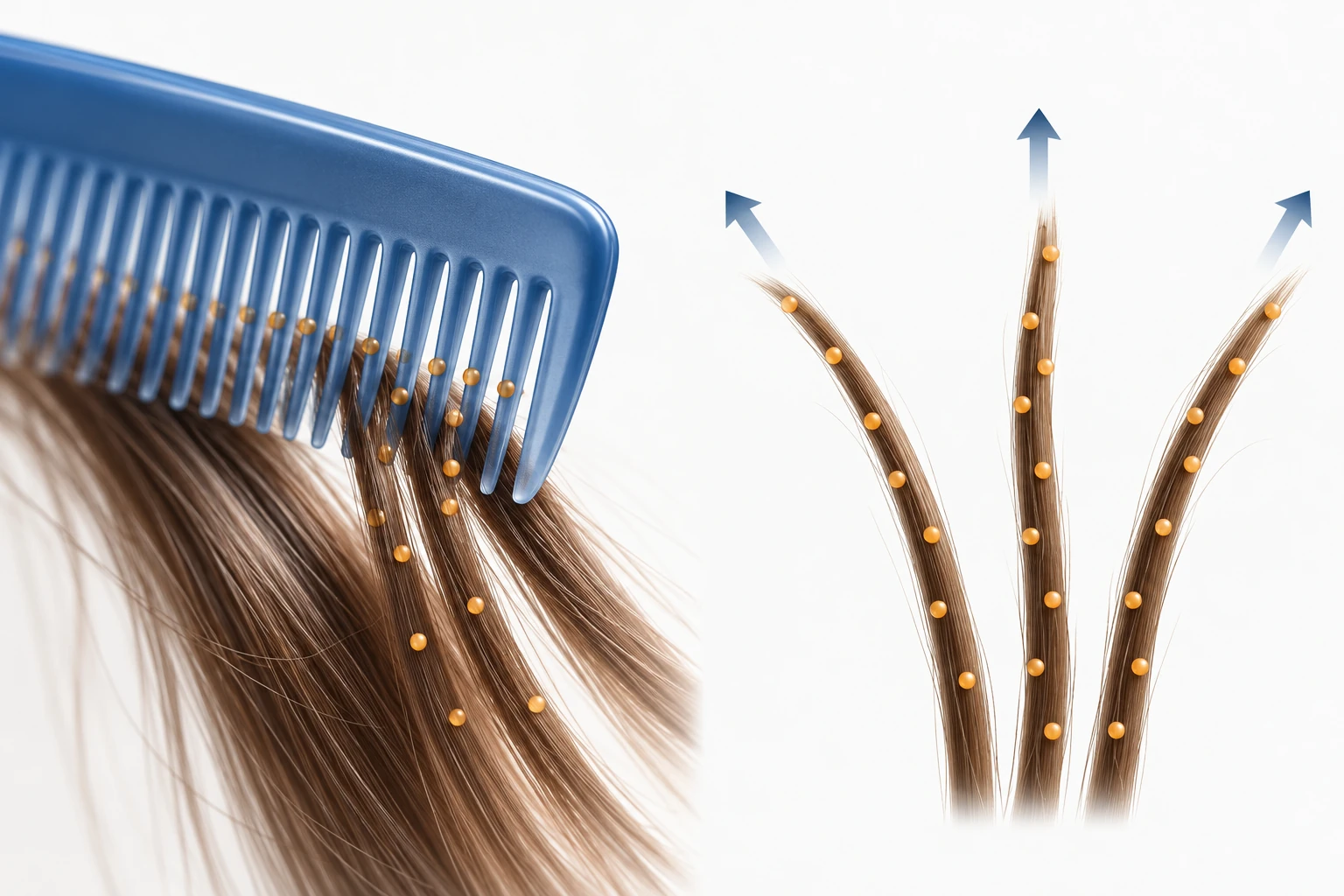
Brushing and hat removal involve repeated contact and separation. Charge can transfer between the surfaces, leaving an imbalance. A comb can attract hair while similarly charged strands push apart. That explains why hair may cling toward one object and fan away from neighboring strands at the same time.
The term triboelectric charging describes this contact-and-separation process. Rubbing is a familiar example, but the important event is the interaction between surfaces. The sign and amount of charge depend on the materials and conditions; hair should not automatically be described as always positively or always negatively charged.
For a practical check, identify the event immediately before the flyaways appeared. Was it a particular brush, pulling off a sweater, or removing a hat? The event gives you a more useful starting point than buying several products before knowing when the problem happens.
Why dry weather can make hair static more noticeable
Humidity and static are connected, but humidity is only one variable. Northeastern University’s physicist interview explains why static tends to be more noticeable in dry winter conditions. Moisture affects how charge redistributes; the contacting materials and repeated motion also influence the result.
Keep the environmental question separate from the hair-care question. A change noticed after entering a different room suggests an environmental comparison. A change that follows one brush or garment suggests a contact comparison. Neither observation proves a single cause, but each helps you choose what to check first.
Avoid treating a specific humidity percentage as a universal cure. ESDA notes that charge generation still occurs at high relative humidity. For personal comfort, follow the instructions for any room humidifier. In an electronics area, environmental changes belong within the workplace’s established control process.
Match the change to the trigger
Use the following table as a troubleshooting aid, not a diagnosis or a tested ranking of remedies. Start with the row that matches what you actually noticed. A useful comparison changes one input while keeping the rest of the routine reasonably similar.
| When you notice it | Question to check | Proportionate next step |
|---|---|---|
| After removing a hat or scarf | Does it follow this item, or several different items? | Compare the contact item before changing the whole routine. |
| Immediately after brushing | Did the tool or brushing method change? | Try gentler handling; avoid repeated brushing simply to chase flyaways. |
| Mainly in a particular room or season | Did the surroundings change while your routine stayed similar? | Consider the room conditions alongside the contact materials. |
| After changing a hair product | Is the new product intended for your hair type and use? | Check its directions and whether it is rinse-out or leave-in. |
| Around an electronics workstation | Is the concern appearance, or protection of exposed components? | Keep cosmetic care separate from the site’s ESD verification. |
If brushing, clothing, room conditions, and products all changed at once, the outcome will be hard to interpret. Record the starting routine before trying another change. You do not need laboratory equipment to compare everyday appearance, but you do need to distinguish an observation from a proven explanation.
What can help reduce everyday hair static?
Choose hair-care measures intended for hair, rather than transferring a fabric or industrial remedy onto it. The American Academy of Dermatology says a suitable leave-in conditioner can diminish static and flyaways. Select a formula for your hair type and follow its application instructions.
- Use the right product category: a rinse-out conditioner and a leave-in conditioner have different intended uses. Do not assume one can replace the other.
- Follow the amount and placement directions: adding more product is not automatically a better response. Check the label before adding another application.
- Reduce unnecessary repeated contact: if the flyaways appear after a specific action, review that action instead of repeatedly brushing the same area.
- Check the setting: consider whether the symptom follows the room, season, clothing, or tool rather than assuming your hair alone changed.
AAD guidance recommends a small amount of a suitable leave-in product applied to the hair, rather than the scalp. Its instructions also distinguish products designed to remain on the hair from those intended to be washed out. This is a product-use decision, not a reason to improvise a diluted mixture.
A useful purchase question is therefore specific: does the product describe static or flyaway control, is it intended for this hair type, and does its application method fit the routine? A generic anti-static label says little without the intended surface and instructions. Do not treat a clothing spray, packaging treatment, or industrial material as interchangeable with a hair product.
If the complaint is actually a sweater or garment clinging during dressing, use the separate guide to static in clothes. The same broad physics can produce different practical tasks; a laundry question needs garment-care instructions rather than a hair-care recommendation.
Keep a simple observation card instead of changing everything
The purpose of this record is to make your next choice clearer. It is an everyday comparison aid, not an electrical test. Use ordinary descriptions of what you saw rather than assigning a voltage or claiming that charge was completely removed.
- Starting condition: note the room, the hat or garment, the brush, and the hair-care product already in use.
- Immediate trigger: write down the action that came before the change, such as hat removal or brushing.
- One change: identify the single action or label-approved product-use change you want to compare.
- Visible outcome: record whether flyaways appeared, whether they returned after the same trigger, and whether the result was practical for you.
- Unchanged or uncertain inputs: note anything you could not keep similar, rather than treating the comparison as conclusive.
For example, ask whether the same hat still produces the same visible result when the rest of your routine stays similar. That is a comparison question, not an account of a completed experiment. If a different room or garment enters the comparison, record it before deciding what the result means.
Keep the question narrow enough to answer. “Did this change make the flyaways less noticeable during my usual routine?” is a reasonable personal observation. “Is this product electrically protective?” requires evidence that a mirror or photograph cannot provide.
What hair static does—and does not—tell electronics teams
Static charge is an imbalance; electrostatic discharge is a rapid transfer of charge. ESDA describes how ESD can affect semiconductor devices. Visible hair movement, a felt shock, and an electronic device’s susceptibility are different observations, so none should be used alone to approve a handling process.
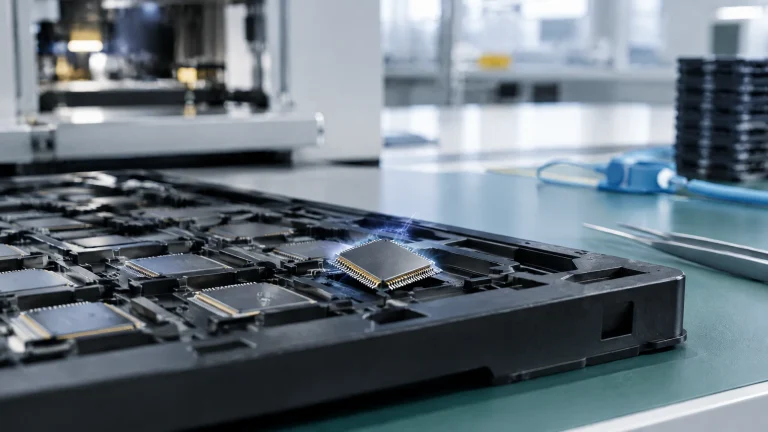
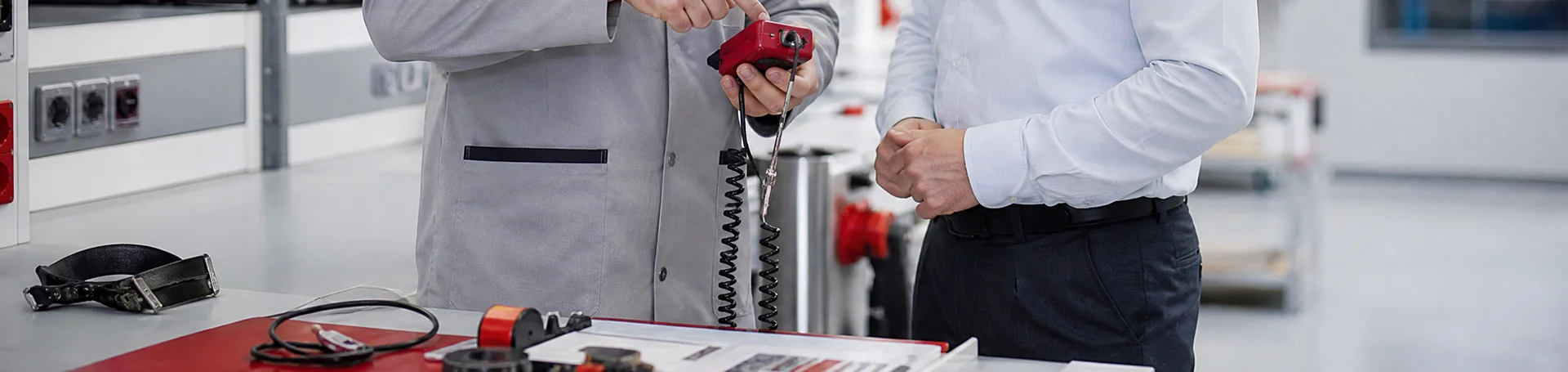
Anti-static control in an ESD-protected area (EPA) is a coordinated workplace task. ESDA guidance discusses personnel controls, work surfaces, materials, packaging, and other measures selected for the process. Hair that lies flat is not evidence that those controls are functioning, and flyaways are not a measurement of a workstation.
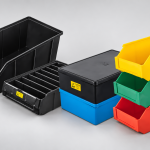
For electronics handling, review the item, its exposed condition, and the route between operations with the ESD program owner. The CH-ESD product catalog can help identify storage and handling families such as bins, boxes, trays, and racks. It is relevant when choosing how components are stored or moved; it is not a hair-static remedy.
FAQ
Does staticky hair always carry a negative charge?
No. The direction of charge transfer depends on the materials and conditions. The explanation for strands spreading apart is similar-charge repulsion; you do not need to assign the same polarity to every brush, hat, or hair interaction.
Will touching metal or wearing a wrist strap fix hair static?
Neither is a general hair-care fix. Grounding a person does not establish a conductive path through every insulating material. Workplace wrist straps belong to the site’s specified personnel-control system; do not improvise electrical connections to address flyaways.
References
- Weber State University: Electrical Energy, Chapter 5 — hair, combs, attraction, repulsion, and charge retention.
- Northeastern University: winter static electricity — physicist explanation of contact materials and dry conditions.
- American Academy of Dermatology: leave-in conditioner guidance — static reduction and intended product use.
- EOS/ESD Association: ESD Fundamentals, Part 1 — charge generation, humidity, and electronic-device risk.
- EOS/ESD Association: ESD Fundamentals, Part 3 — materials and coordinated workplace controls.