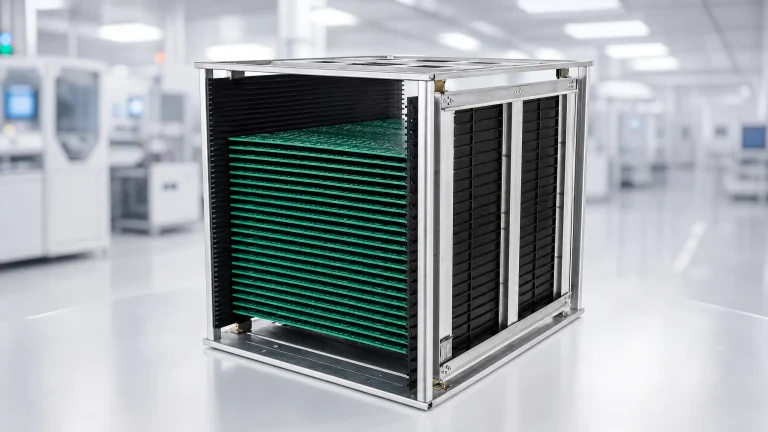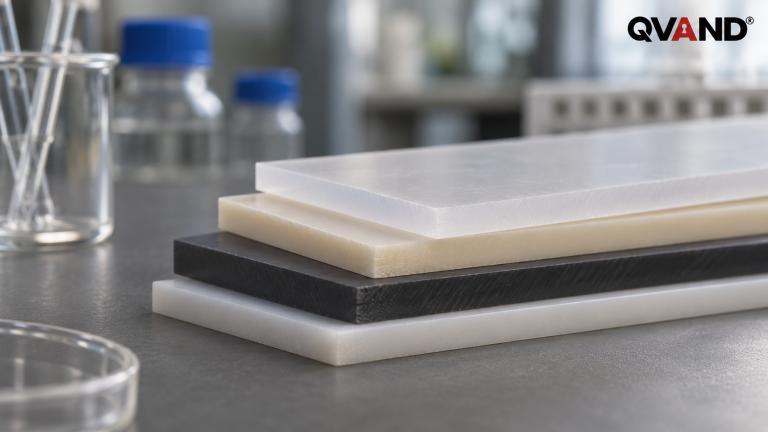


Polyethylene plastic, usually abbreviated PE, is a thermoplastic material family widely used in packaging. It can appear as flexible film, a solid sheet, a molded article or an expanded foam. The name identifies the material family, not one finished product with one set of properties.
For a useful selection, distinguish the PE type, the product form and the function required. Choosing a cushioning pad is a different task from choosing a film liner. Protecting an electronic component from movement is also a different task from meeting an ESD requirement.
What is polyethylene plastic?
Polyethylene is the polymer family behind familiar names such as low-density polyethylene, high-density polyethylene and linear low-density polyethylene. Supplier information describes a range of densities and processing characteristics within that family.
That range explains why one short name appears on products that look and feel very different. A thin film and a solid plastic sheet can both be polyethylene, but their physical form and specification determine how they can be used.
For a buyer, PE is therefore an identification starting point. The next questions are which type or grade is offered, how it has been made into the finished product, and what information supports the intended function.
Do not take a broad resin-family property range and use it as an acceptance limit for a finished packaging item. A range describing several grades cannot replace the specification for the offered film, sheet or foam.
LDPE, HDPE and LLDPE: a useful first distinction
LDPE means low-density polyethylene; HDPE means high-density polyethylene; LLDPE means linear low-density polyethylene. LDPE has a more branched structure, while HDPE and LLDPE belong to linear PE categories. These distinctions help explain why the family includes flexible films as well as relatively stiff articles.
The US International Trade Commission’s historical technical summary explains that density, molecular weight and molecular structure affect PE properties. Its product examples distinguish HDPE bottles from low- and linear-low-density film applications. Those are material-form examples, not present-day market statistics or a guarantee for every resin grade.
Plastribution describes polyethylene applications across flexible and rigid packaging, with multiple densities and processing characteristics. The relevant product form and grade need to be stated before two quotations can be compared properly.
| Name | General material distinction | Application or selection context |
|---|---|---|
| LDPE | Branched, low-density structure; high-pressure polymerization route | Flexible packaging and film; identify the finished grade |
| HDPE | Linear, higher-density category; higher density generally increases stiffness | Bottles and other relatively rigid forms; verify the item requirement |
| LLDPE | Linear, low-density category; low-pressure route using ethylene with comonomers | Packaging films and bags; not simply an LDPE name change |
| PE foam | A cellular product form using PE | Cushioning, cleanliness or electrical qualification |
The LDPE/LLDPE distinction therefore includes chain structure and production route, even though both sit in a low-density category and can serve film applications. These family-level differences explain why a film specification should name the offered material rather than treating the abbreviations as synonyms. They do not establish that one film always outperforms another.
Use these names to narrow a discussion, then move to the actual item. If a quotation changes the PE type or grade, ask which requirements remain unchanged and which need a new comparison. A familiar family name is not proof of interchangeability.
Film, sheet, molded part and foam are different product forms
Film describes a thin flexible form. A solid sheet provides a different geometry. A molded article has its own finished shape. Foam introduces a cellular structure and is used as a different kind of finished material.
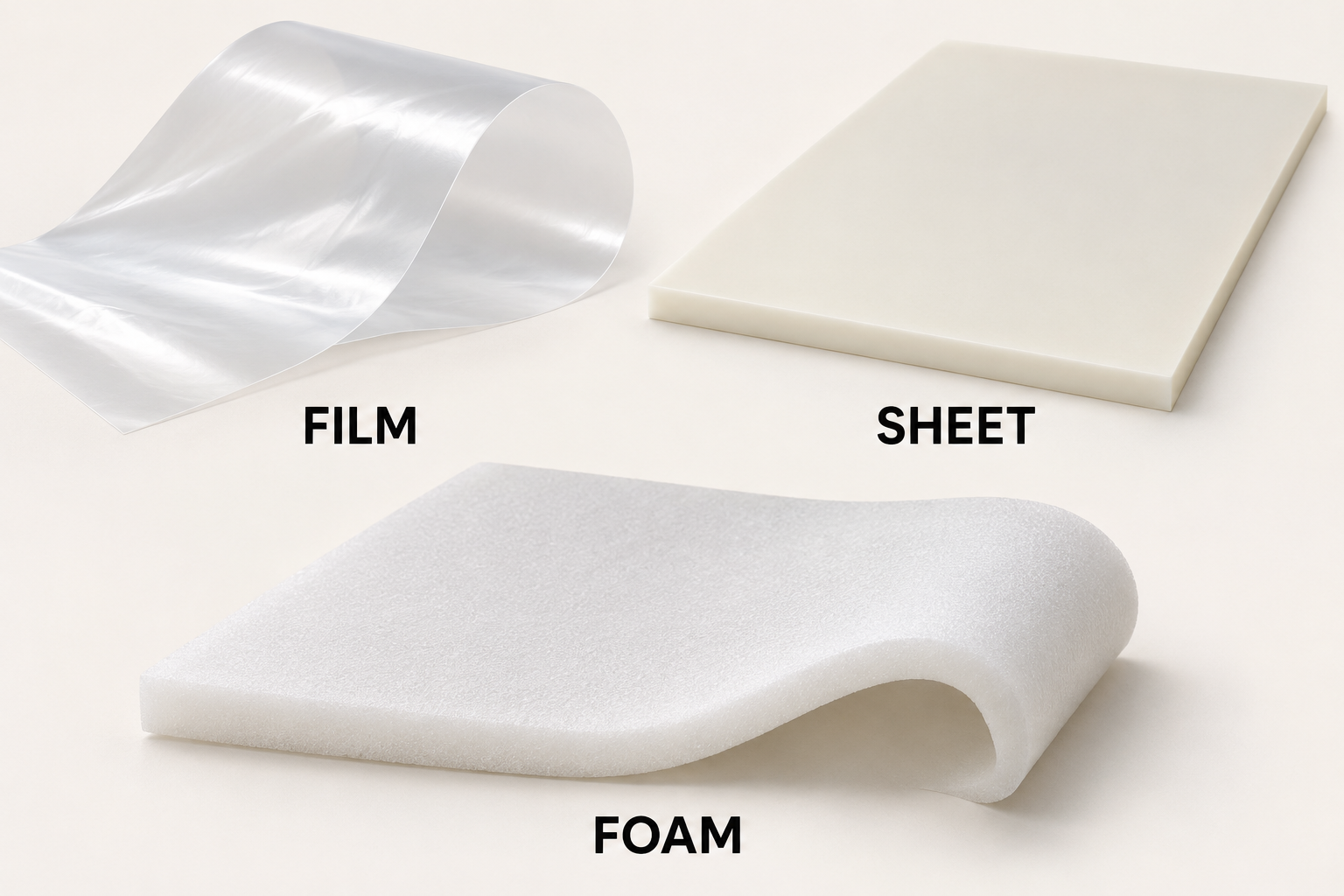
The same dimensions do not make these forms functionally equivalent. A solid sheet and a foam pad may occupy a similar space while being selected for different reasons. A material-name match is only one part of the comparison.
Begin with the part the packaging must play. Is it separating surfaces, forming a liner, locating a component, cushioning an item or supporting a shape? The answer helps identify which product form deserves consideration.
Then specify the features that affect fit and handling. A finished shape needs its own dimensional information. A liner needs a defined form and intended contact. A cushion needs an evaluation relevant to the component and packaging arrangement. These are application questions, not properties that can be read directly from the abbreviation PE.
Why PE, PET, EVA and PU are not interchangeable names
Similar abbreviations can hide different material descriptions. PET, commonly discussed as a polyester, is not another spelling of PE. Likewise, EVA and PU should not be rewritten as polyethylene simply because a supplier offers them in the same foam-product family.
Quan Dun’s foam listing names EVA, IXPE, PU and EPE as different options. The listing is a useful reason to preserve the actual material description when requesting information. It is not a reason to collapse every option into a generic “anti-static foam” specification.
For a replacement, copy the existing material identity exactly and compare it with the proposed item. If the new quotation changes the polymer family or foam description, make that difference explicit before reviewing price.
Appearance is not a reliable substitute for the declaration. A white foam, a black foam and a colored foam may raise useful visual questions, but color alone does not identify the polymer or establish a functional property.
The practical rule is simple: keep polymer identity, finished form and claimed function in separate fields. This makes it much easier to identify what is actually changing in a material substitution.
Mechanical protection and ESD protection are separate tasks
Mechanical protection concerns what happens to the component during handling and movement. ESD protection concerns electrical risks and the packaging properties needed for the relevant situation. A material may be selected for both tasks, but the evidence for one does not automatically answer the other.
Plain PE should not be treated as a complete ESD packaging specification. Ask what electrical property is required and what evidence covers the offered finished item. Do not infer that property from the polymer family, color or a cushioning description.
Likewise, a statement about an electrical property does not establish that the packaging will hold a component in the correct position or protect its vulnerable features. Fit, contact points and the complete packaging arrangement still need attention.
For a component moving between storage and transport, identify the conditions along the route. An insert that serves one handling arrangement may need a different evaluation when placed in another container or used with a different component.
Quan Dun’s ESD foam-sheet listing includes IXPE and EPE options. Ask for the selected item’s material, finished dimensions and relevant evidence rather than assuming that every foam in the family has identical properties.
How to read a packaging material specification
A good packaging-material specification starts with an identifiable finished item and explains how it is intended to be used. It should allow another person to connect the supplied material with the actual packaging decision.
Record the product code or drawing reference, material description, finished form and dimensional requirements. Then identify the functions that need evidence. A requirement may concern fit, contact, handling, cleanliness or electrical behavior; each should remain visible.
Where test information is provided, check which sample or configuration it covers. A document for a resin does not necessarily describe the complete converted article. A document for one foam thickness or packaging arrangement should not silently be extended to every proposed version.
Keep the specification revision linked to the sample or item accepted. If a supplier changes a material description, construction or finished shape, the purchasing record should make it possible to recognize that change.
The aim is not to create a long document for every purchase. It is to preserve the information that explains why the chosen item is suitable. A concise, specific record is more useful than a detailed generic description of polyethylene.
A comparison worksheet for liners and cushioning
Use a worksheet to compare the offered products against the same task. Leave unknown fields visible instead of assigning a favorable result based on the material name.
- Component and contact: Identify the part, intended orientation, relevant surfaces and features that must remain protected.
- Packaging role: State whether the item separates, locates, lines or cushions.
- Material and form: Record the offered polymer description and finished construction.
- Fit: Link the finished dimensions or drawing to the actual component arrangement.
- Functional evidence: Identify the information addressing each required property.
- Decision and change control: Record the accepted item and which changes require a review.
Consider an illustrative enquiry for an insert that holds a small assembly inside a reusable box. A useful request describes the assembly envelope, contact restrictions and the insert’s role. “PE foam, good quality” does not tell the supplier which part of the component needs support.
In a liner enquiry, the relevant questions may be different. The buyer may need a defined barrier between the container and its contents rather than a shaped cushion. Keeping the task explicit helps avoid comparing unlike products simply because both are made from polyethylene.
Three material-selection mistakes to avoid
Buying by polymer name alone
A quotation says polyethylene but omits the product form and finished specification. Request those details before treating it as equivalent to an existing item. A material family is too broad to describe every packaging function.
Using a broad property range as an item limit
A general material guide provides values for several PE grades. Those values help explain the family, but they do not define the acceptable performance of a particular converted article. Obtain the information corresponding to the offered item.
Combining independent functions into one adjective
A request for “protective foam” can refer to cushioning, surface separation or an electrical requirement. State those needs separately. Otherwise, a supplier may answer one interpretation while the buyer assumes another has been covered.
These examples are decision aids rather than reported product tests. They show how to move from a broad material description to a specification that can support a real comparison.
Questions about polyethylene plastic
Is every polyethylene product the same material grade?
No. The PE family includes different types and grades. Identify the actual offering and relevant finished-item requirements before comparing products.
Does a foam description prove cushioning performance?
It identifies a form, not a complete result for every component and package. Evaluate the actual configuration against the required function.
Does black PE automatically mean ESD-safe?
No. Color is not an electrical specification. Request the relevant property and evidence for the offered item and intended conditions.
What should an enquiry include?
Include the component or application, material identity, product form, fit requirements and the functions that need evidence. This gives a supplier a task it can address without guessing.
References
- Plastribution: Polyethylene — material family and packaging context.
- USITC: Polyethylene in Primary Forms — historical technical classification and product-form examples; no current market figures used.