

What does IP68 mean? IP68 is an IP Code marking for enclosure protection. The first digit addresses protection against solid-particle access and dust, while the second digit addresses water protection under the conditions defined for the specific product and test. The code is useful, but it is not a universal “waterproof” promise.
For equipment selection, read IP68 together with the model documentation, installation method, cable entries, seals, operating environment, and test basis. Two products can carry the same code while having different instructions and limits for use.
How to read the two parts of IP68
The first digit is the solid-particle part of the code. A level 6 marking is commonly described as dust-tight in the applicable enclosure classification. The second digit is the water-protection part. A level 8 marking indicates protection for continuous immersion under conditions established by the manufacturer and the applicable test basis.
That last condition matters. The code itself does not give one universal immersion depth, duration, liquid type, temperature, pressure, or installation arrangement for every product. Those details belong to the product documentation and test evidence.
In practical terms, dust protection and water immersion are separate parts of the review. A sealed housing can resist one exposure while still needing different evidence for another. Read the code as two coordinated dimensions, then check whether the test configuration matches the way the equipment will actually be installed and serviced.
The first digit and second digit should be recorded separately in the purchasing file. This prevents a reader from treating the code as a single marketing adjective and makes it easier to compare an enclosure with another code or with a product that has incomplete marking information.
Why IP68 is not a universal waterproof claim
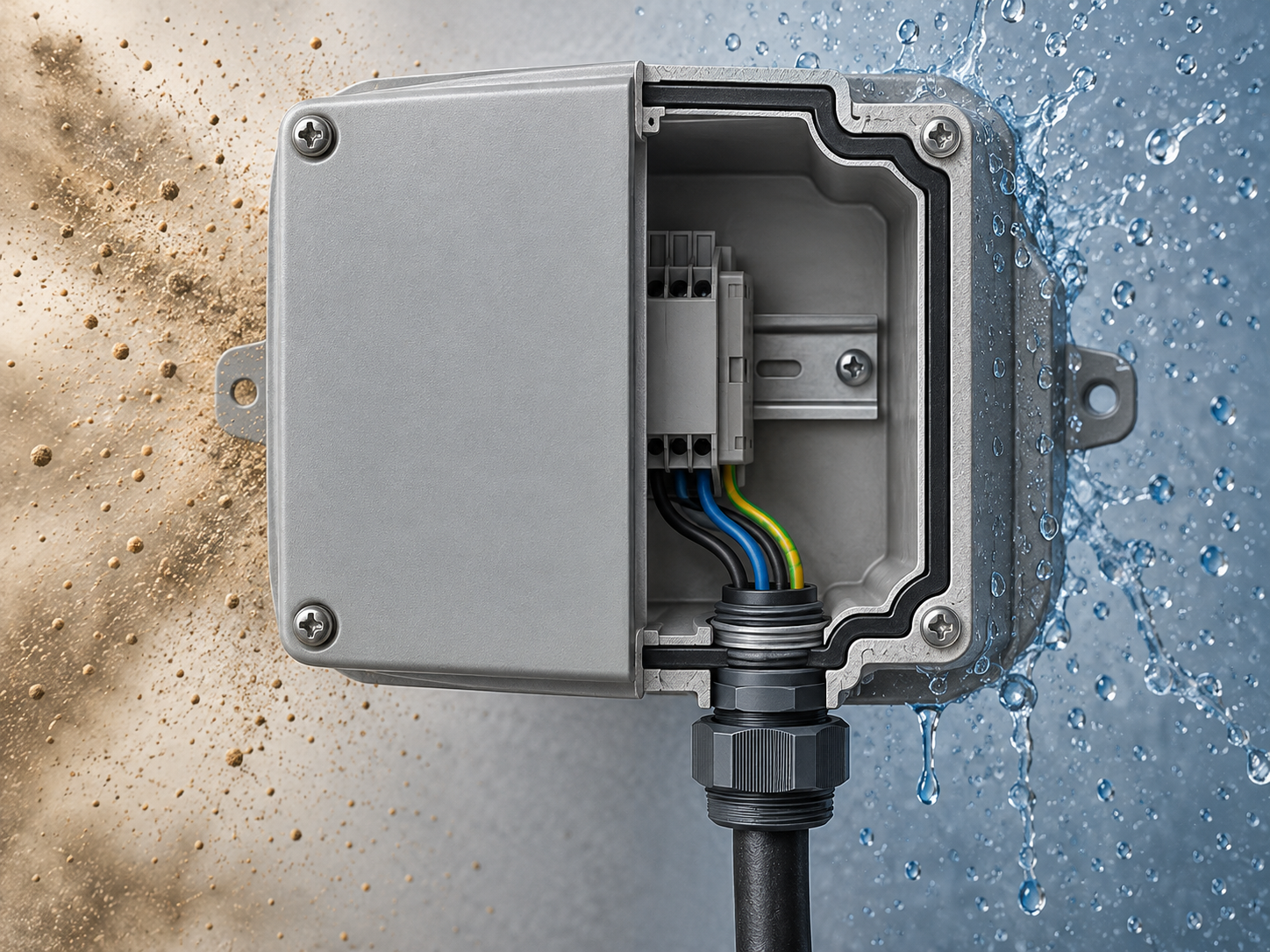
A rating applies to the enclosure configuration and the conditions evaluated. A cover that is not fully closed, a damaged gasket, a changed cable gland, or an unapproved accessory can change the protection boundary. Field installation can also introduce joints, connectors, vents, or service openings that were not part of the original test.
Water exposure is not one single environment. Fresh water, salt water, cleaning chemicals, condensation, pressure, heat, vibration, and repeated opening can create different risks. Use “IP68” as a starting point for verification, then check the model’s stated conditions and maintenance instructions.
The enclosure boundary includes more than the main shell. Gaskets, fasteners, doors, cable glands, connectors, vents, and service covers all influence the assembled result. A replacement seal or field-installed cable entry may require a separate review, especially when the equipment is opened during commissioning or maintenance.
A rating also does not describe every environmental stress. Temperature cycling, impact, vibration, ultraviolet exposure, chemical contact, and cleaning can affect seals and housing materials. If those conditions matter, add them to the equipment specification instead of assuming that IP68 covers them automatically.
What to verify before selecting IP68 equipment
- Exact model: record the enclosure model, revision, cover, gasket, and supplied accessories.
- Test conditions: request the stated water conditions, duration/depth basis, and any limits attached to the rating.
- Cable entries: verify glands, connectors, plugs, and field-installed penetrations as an assembled system.
- Environment: identify dust, liquid type, temperature, pressure, chemicals, movement, and cleaning exposure.
- Maintenance: check gasket inspection, closure torque, replacement interval, and conditions that void the stated result.
The CH-ESD ESD Box category addresses a different decision: storage and handling of ESD-sensitive parts. The product catalog helps separate those handling formats from enclosure-protection questions. An ESD storage product should not be called IP68 or waterproof unless current model-specific evidence supports that statement.
For purchasing, keep the supplier’s marking, test basis, installation instructions, and revision date with the selected model. That record makes it easier to confirm whether the rated enclosure, installed accessories, and maintenance condition still match the operating environment.
When comparing products, ask whether the marking applies to the supplied configuration or to a bare enclosure before accessories are installed. Request the relevant manual, drawings, cable-entry instructions, and test statement together. A clear evidence package is more useful than a higher-sounding adjective.
This approach also protects future maintenance decisions. If a cover, gasket, connector, or cable route changes, update the equipment record and confirm the protection basis again before returning the enclosure to service.
Keep the evidence with the asset owner, installation record, and maintenance history so the rating is not separated from the configuration it describes.
That record should follow the equipment through installation, service, and later replacement.
FAQ
What does IP68 mean?
It means an enclosure is marked for a defined level of solid-particle and water protection under the applicable IP Code conditions. The exact model’s test basis and use limits still need to be checked.
Is IP68 waterproof?
IP68 indicates a defined water-protection classification, but “waterproof” is too broad without the model’s conditions. It does not automatically cover every liquid, depth, duration, temperature, chemical, cable entry, or installation.
References
- IEC 60529: Degrees of protection provided by enclosures — official IP Code publication and scope.
- Samsung IP68 support guidance — manufacturer explanation of model-specific protection conditions.
- RUGGEAR IP67 and IP68 explanation — equipment-oriented context for the rating distinction.