
IP54 means an enclosure is dust-protected and protected against splashing water from any direction. It allows limited dust entry that does not impair satisfactory operation or safety. It does not describe a dust-tight enclosure, protection against water jets, or suitability for immersion.
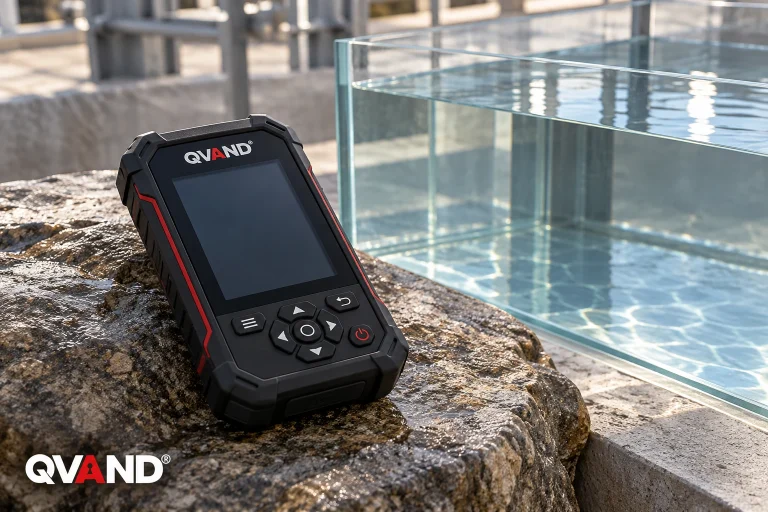
For electronics buyers, the useful question is whether those two protections match the equipment’s actual environment. A cabinet beside a dry assembly line, a portable instrument used near a sink, and a box on an exposed loading route present different problems. The same number on a quotation does not resolve every one of them.
This guide separates the meaning of the code from the checks needed to select an IP54 enclosure. It also explains why environmental protection and electrostatic discharge control need separate evidence.
What do the 5 and 4 in IP54 mean?
The two digits describe different protection dimensions. Read them separately before comparing complete codes.
| Part of the code | What it describes | Meaning for IP54 |
|---|---|---|
| First digit: 5 | Protection against solid foreign bodies | Dust-protected; limited dust ingress may occur without harmful interference. |
| Second digit: 4 | Protection against water ingress | Splashing water from any direction must not have harmful effects under the applicable test. |
“Dust-protected” therefore has a narrower meaning than “dust-tight.” Likewise, splash protection is a defined water category, not a promise that the enclosure can tolerate every wet process. Avoid replacing the code with an unqualified word such as “waterproof” in a purchase specification.
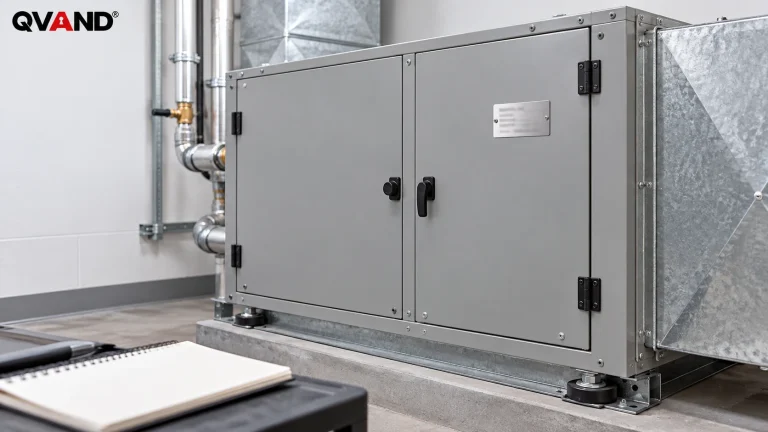
A useful description keeps the object in view: the rating belongs to the enclosure configuration being evaluated. Ask which assembled model, cover arrangement and interfaces the supplier’s declaration covers. A material description such as plastic, steel or aluminum does not answer that question.
IP54 vs IP44, IP55 and IP65
Choose a neighboring rating by identifying which exposure has changed. Do not treat the code as a single score.
| Rating | Solid-body protection | Water protection | Main difference from IP54 |
|---|---|---|---|
| IP44 | Objects 1 mm and larger | Splashing water | Different solids category; the water digit stays 4. |
| IP54 | Dust-protected | Splashing water | The reference combination. |
| IP55 | Dust-protected | Water jets | The water category changes; the dust digit stays 5. |
| IP65 | Dust-tight | Water jets | Both the dust and water categories change. |
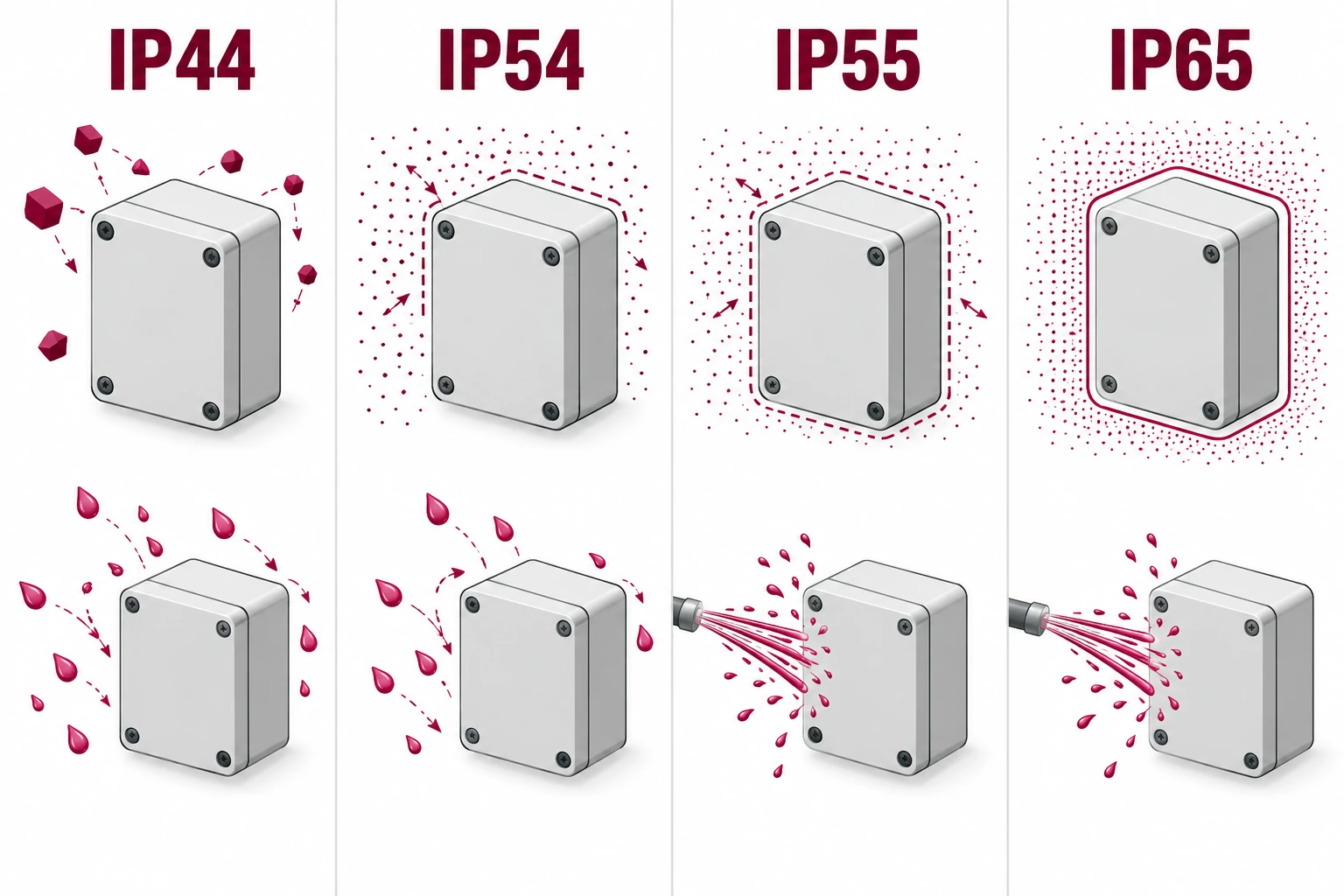
For example, an engineer comparing IP54 with IP55 should investigate the water exposure first. If dust exclusion is the unresolved requirement, changing only the second digit does not address it. This way of reading the code makes a supplier discussion more precise than asking for “a higher IP.”
Does IP54 fit the way the equipment will be used?
Start with an exposure description, then ask for evidence against that description. The following matrix is a purchasing aid rather than an application approval.
| Situation to describe | Question to resolve | What IP54 alone leaves open |
|---|---|---|
| Dust around a closed enclosure | Can limited dust ingress affect the contents or operation? | Whether a dust-tight category is required. |
| Occasional splashes | Is the real event splashing, or a directed cleaning jet? | Jet protection is a separate water category. |
| Equipment near cleaning operations | Which liquids and cleaning method are used? | Chemical compatibility and other cleaning conditions. |
| A route with pooling or possible immersion | Can the equipment enter standing water? | IP54 does not establish immersion protection. |
| Use outside a building | What weather, sunlight and temperature conditions apply? | The complete outdoor suitability decision. |
Consider a proposed electronics inspection station near a parts-washing area. “Near washing” is too vague for a rating decision. The buyer can instead describe where the station sits, whether cleaning staff direct water toward it, and which surfaces are exposed during use. Those facts let the supplier evaluate the intended enclosure rather than guess at the process.
If the equipment will later move to another location, keep that change in the decision record. A rating selected for the original exposure does not replace a review of the new application.
Check the assembled enclosure, not just the catalog heading
A useful IP54 quotation identifies what is included in the rated configuration. Ask the supplier to make the relationship between the rating and the delivered assembly explicit.
- Model and configuration: Which drawing revision, cover and accessories does the rating cover?
- Openings and interfaces: Are the proposed connectors, glands, windows, vents and unused openings included in that configuration?
- Operating state: Which covers or doors must be closed during the stated exposure?
- Evidence: What declaration or test documentation supports the specified configuration?
- Maintenance: Which seals, closure parts and service checks does the manufacturer specify?
- Changes after delivery: Who reviews later machining, accessories or replacement parts?
These are questions for the equipment or enclosure supplier, not instructions to modify an electrical assembly. They help prevent a purchasing gap in which the quoted empty box and the installed equipment are treated as the same object without supporting documentation.
Keep the answers together with the exposure description. A short acceptance record can contain the application, model revision, included interfaces, declared rating and supporting document reference. That record is more useful at the next reorder than an isolated screenshot of an IP54 badge.
Where several teams are involved, assign one person to reconcile the enclosure specification with the finished assembly. Procurement can check that documents identify the ordered configuration; engineering can decide whether that configuration matches the intended use.
IP protection and ESD protection answer different questions
Ingress protection concerns solid bodies and water entering an enclosure. An electronics-handling program also needs to address electrostatic discharge, packaging and access to components. An IP code does not establish those properties.
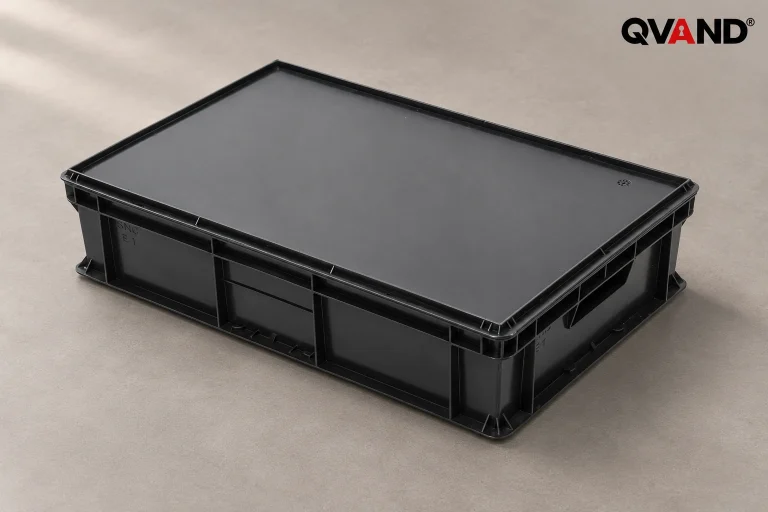
For example, a lidded conductive tote may be useful for organizing components between workstations. That does not establish an IP54 rating for the tote. Conversely, a splash-protected equipment housing does not by itself establish the ESD performance needed when an operator handles the contents.
Quan Dun’s ESD box range is a relevant starting point for storage and handling configurations. Define the part envelope, compartments, access pattern and route separately from any environmental enclosure requirement. Ask for evidence for each property that matters to the application.
A practical request has two sections: the environmental exposure and enclosure configuration in one, and the component-handling and ESD requirements in the other. Keeping those decisions explicit avoids treating a lid, dark plastic or an IP label as proof of protection it does not describe.
Questions buyers still ask
Can IP54 equipment be used outdoors?
The code alone does not settle outdoor suitability. Describe the actual exposure and ask the equipment manufacturer to confirm the intended application, including conditions beyond solids and water ingress.
Does the original rating still apply after adding an opening?
Do not assume it does. Ask the responsible manufacturer whether the changed assembly is covered and which configuration evidence applies before relying on the original declaration.
Is IP54 equivalent to a NEMA enclosure type?
No universal two-way conversion follows from the IP code. NEMA classifications include additional considerations. Cross-reference tables can help locate candidates, but the required rating should be supported for the actual enclosure.
References
- Rittal: protection categories to IEC 60529 — solid-body and water category definitions.
- Gore: IP and NEMA ratings — the different factors covered by the two systems.