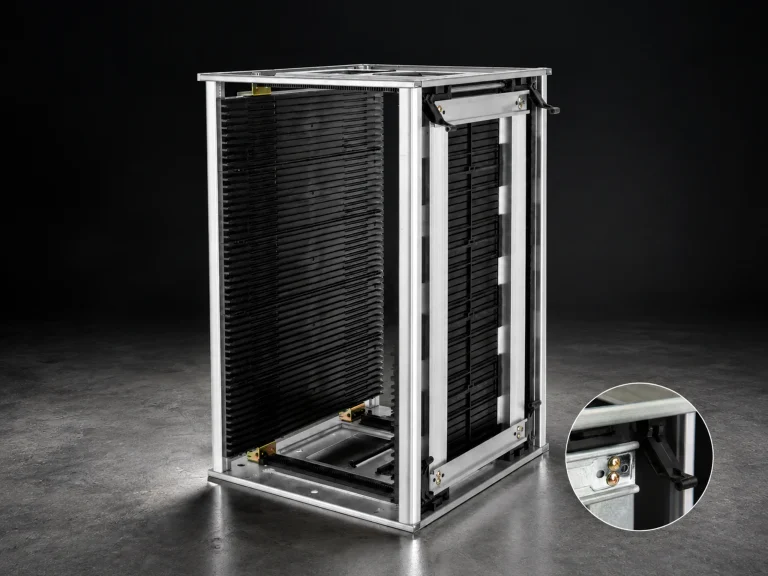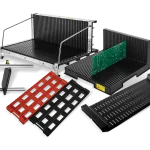

ESD magazine racks The protection of sensitive electronic devices or components such as printed circuit boards (PCB), from discharge of static electricity (ESD) is very important and it is very essential to select the right material because the material selected affects control of ESD, compliance issues and process efficiencies. This guide outlines the factors involved and the commonly used materials to protect devices from ESD, and facilitates customers in selecting appropriate materials.
Why ESD Protection Matters in Electronics Manufacturing
The term electrostatic discharge refers to the transfer of static electricity between two objects, resulting in damage to sensitive electronic devices. ESD racks help in avoiding the build-up of static charges and reducing costs associated with failures. It is important to use appropriate materials in ESD racks so as to ensure safety, decrease risk and comply with ANSI/ESD S20.20, an industry standard.

Main Materials Used in ESD Magazine Racks
Conductive Plastics: Typically, the materials used are either polypropylene or polycarbonate with the incorporation of conductive additives. Their lightweight, robust, and stable antistatic properties prove useful for being employed in SMT lines.
Aluminum Alloy: This type of material is providing strength as well as conductivity but may require specific grounding and, at times, conductive coatings for ESD protection but is suitable for heavier printed circuit boards or applications requiring high-temperature tolerance.
Stainless Steel: It is strong and flameproof; therefore, it is suitable for both difficult environments and clean rooms, but it has a bigger weight and needs a proper design to ensure ESD protection and simplify cleaning process.
Composite Panels: The racks are typically used for specific ESD behavior in modern design and tend to be lightweight but typically at a high cost and for specific purposes.
Key Factors When Choosing ESD Rack Materials
ESD Performance: The correct range of electrostatic discharge values, which varies from 104 to 108 Ohms, should state the value of surface resistivity and the required certificates.
Mechanical Strength: Ensure racks can withstand handling and PCB weight.
Cleaning & Maintenance: Select materials compatible with your plant’s chemicals and cleaning procedures.
Portability: Lightweight plastics are ideal for frequent mobility; metal racks suit fixed installations.
Adjustment Types and Their Importance
Different approaches exist for racks allowing for the adapting of racks to different PCBs. The screws method has high precision, but is slow. Gears and lever methods allow for ease of adjustment, so choose a method based on your production speed and number of variations.
Materials for SMT vs Conventional PCB Storage
SMT Storage: Conductive plastics help avoid abrasions and simplify automation compatibility.
Conventional PCB Assembly: Aluminum or steel racks withstand larger, heavier boards and heat.
Hybrid racks (plastic with metal frames) can provide flexibility across multiple assembly types.
Supplier, Certification, and Customization
Premium suppliers deliver ESD-compliant racks with certifications, customizable options and clear usage guidelines. For magazine rack enquiries, official QuanDun is a reliable choice.
FAQ: How to Choose the Adjustment Type of ESD Magazine Rack?
When the PCB size is routinely modified, using gear or rack with levers would help to save time. However, when manufacturing standardized boards, using the adjustment screws would turn out to be both cost-efficient and reliable solution. You should always prioritize the requirements of your production string when making decisions.
In conclusion, selecting the right material and adjusting system for your ESD magazine rack will help you prevent ESD incidents, make your operations easier, and comply with your quality standards. Always keep in mind the antistatic characteristics of the material, its strength, the easiness of adjustments, and reliability of the producers in order to make the right choice for your production processes and successfully use ESD-compliant magazine racks for the storage of printed circuit boards in the future.