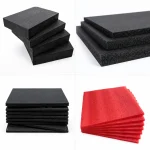


ESD foam sheets should be selected by the interface they create around the component and by the final handling route. The useful questions are whether the foam contacts the part, cushions it, holds it in a cut cavity, or separates layers during movement. Color or the phrase “anti static” does not by itself establish the behavior of the finished package.
1. How to choose esd foam sheets for the component interface
Describe whether the foam will touch leads, a housing, a PCB edge, a connector, or a bagged assembly. Then define the mechanical job: surface separation, cushioning, cavity retention, edge protection, or a reusable layer. A sheet used as a divider has a different design basis from a die-cut insert. Record the contact areas and any surfaces that must remain free for inspection or handling.
2. Choose thickness and cavity geometry from the part envelope
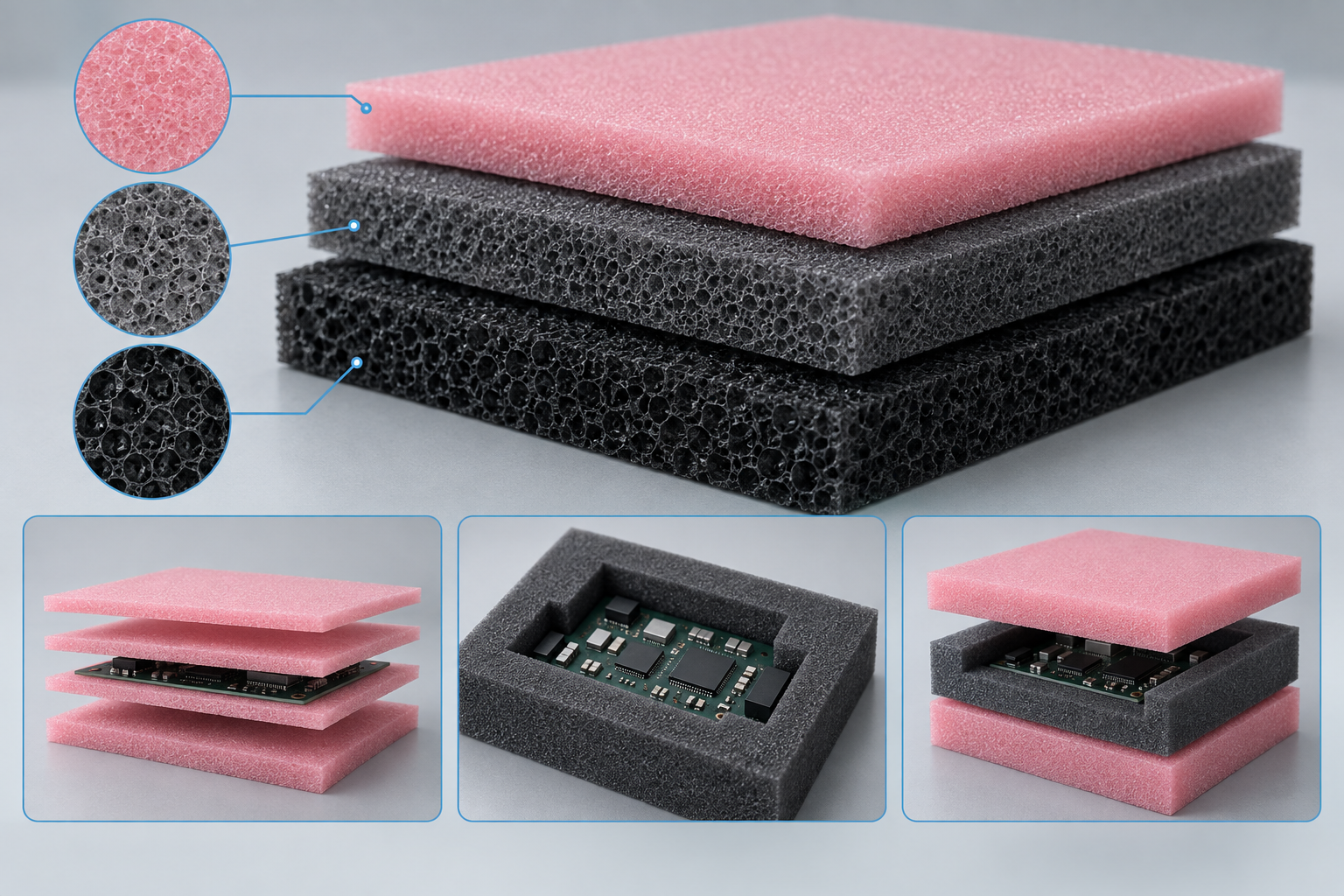
Measure the component envelope, protrusions, connector clearance, and the space available inside the box or tray. Set the sheet thickness and cavity depth from those dimensions and the required support, then test the cut part with the real component. Avoid inventing a universal thickness: compression, tolerance, cutting method, and packaging orientation change the result. Ask for a drawing showing the finished cavity and the tolerance around the part.
3. Check cutting, cleaning, and material evidence
Ask whether the selected EVA, IXPE, PU, or other foam is intended for the proposed cutting method and whether dust, adhesive, compression set, or surface transfer matters in the process. Confirm cleaning and storage requirements, the material identification, and the resistance or test evidence for the final configuration. If the foam is combined with a bag, tray, adhesive, or outer carton, request evidence for the combination where the process depends on it.
4. Prepare a foam-sheet request that can be quoted
Send the component drawing, quantity, cavity layout, sheet dimensions, thickness range, cut tolerance, access direction, packaging route, and sample quantity. Request a material data sheet, cut drawing, surface and edge treatment, adhesive details if any, and the approval method. Use the CH-ESD anti-static foam product route as the starting point, then approve the cut sample with the real part and package before ordering a production batch.
- Review the CH-ESD ESD foam sheets product route for material-family context.
- Use the contact route to send the component drawing and cavity requirements for a quote.
Approve the first cut sample with the real outer package, not on a bench by itself. Close and reopen the package, move it through the planned route, and inspect whether the part shifts, rubs against a cut edge, or becomes difficult to remove. Check the foam after the expected handling cycle and record the accepted material, thickness, cavity drawing, and revision. This keeps the production order tied to the tested configuration.
If the design uses adhesive, a bag, a tray, or a carton with the foam, treat the combination as the package being approved. The material name alone does not describe the final interface. Ask the supplier to identify the supplied foam and the finished conversion, then keep the sample and drawing together with the packaging specification.
In ESD foam packaging, the foam is one part of a package system. Anti static foam may be used as a layer, a cushion, or a cut insert, but each use creates a different contact and support condition. Approve the actual part, cavity, outer carton, and movement route together.
For repeat orders, retain the accepted foam sample with the cut drawing and the material description. This makes it possible to compare a new batch of ESD foam sheets against the approved condition without treating a color or product name as proof of identical behavior.
References
- EOS/ESD Association: ESD Fundamentals, Part 3 — ESD control procedures and materials.
- ANSI/ESD S541-2026 — packaging and test-method context.
- Correct Products: ESD foam packaging — example of ESD foam packaging applications in the current SERP.
- Index Packaging: ESD foam — example of custom foam packaging considerations in the current SERP.
- IEC 61340-5-1:2024 — ESD control-program requirements.