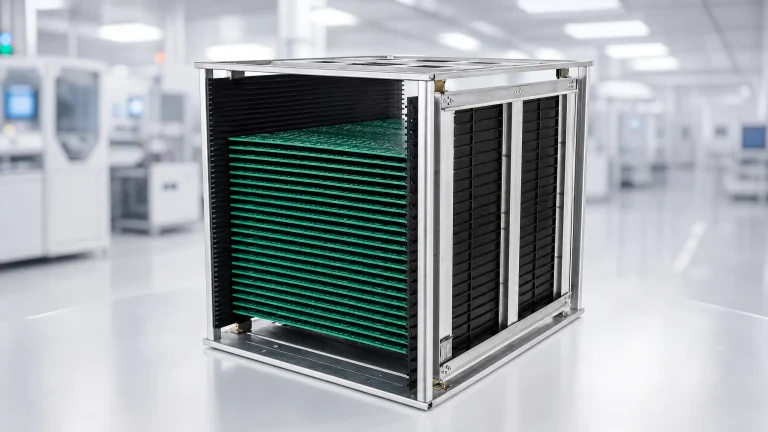

The safe PCB magazine rack loading and unloading is an essential practice in the manufacturing of electronics. Magazine racks play a critical role and help in loading, storing and transporting PCBs, as they help to shield delicate electronic devices from damage as well as from contamination and ESD. By learning about and mastering the procedure of PCB magazine rack loading and unloading, operators can greatly reduce the chance of mistakes and failures that result in a financial loss due to defects or costly reworks. The aim of this guide is to share useful information with the reader about PCB magazine rack loading and unloading properly.
The Role and Design of Magazine Racks in PCB Handling
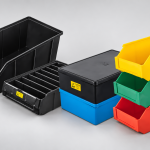
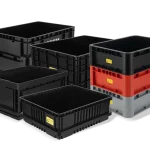
Magazine racks serve more purposes than acting solely as organizing tools; they also help protect printed circuit boards (PCBs) during the manufacturing procedure. Magazine racks are usually made of antistatic materials and fitted with adjustable supports so they can hold printed circuit boards of different forms, thicknesses, and profiles. In high-volume production environments, racks may be equipped with a modular system that allows quick changes to hold different sizes of the boards. The design of the racks preserves the boards from mechanical damage and keeps them firmly fixed without moving during transportation so that the boards can be properly oriented for further processes like automated assembly or inspection. Taking the right rack type is key to ensuring that the boards will be handled safely; the wrong rack will cause board collision, deformation, and defects that can adversely impact the overall efficiency and quality of the production process.

Critical Preparations Before PCB magazine rack loading and unloading
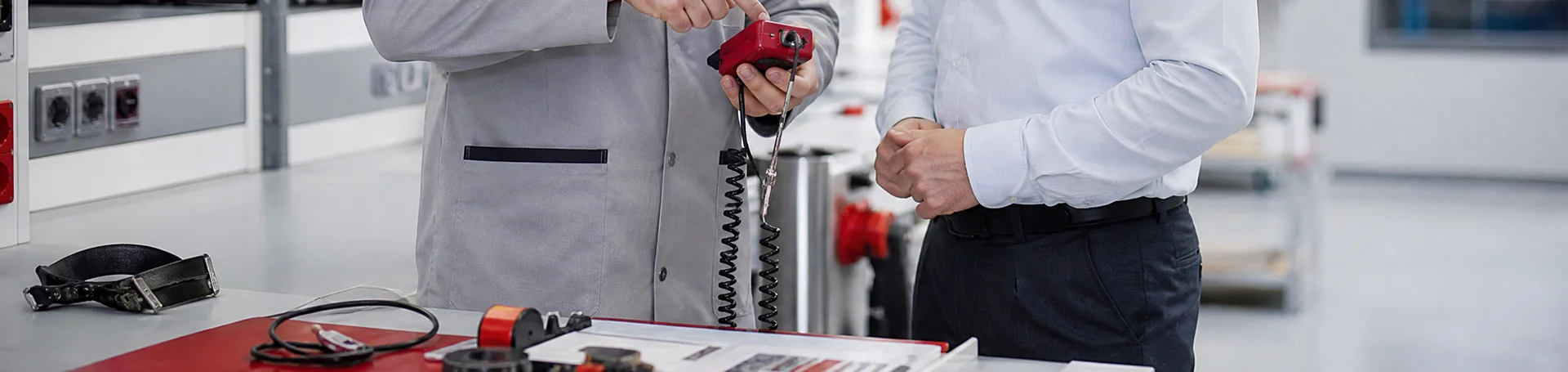
PCB magazine rack loading and unloading can be deemed successful only if proper preparation is conducted. To begin with, the cleanliness of the racks should be analyzed carefully to ensure that there is no dust, grease, and solder residues on the surface. Make sure that all guides and rails are adjustable and that they correspond with specifications of PCBs to be placed on the racks. Everything should be done to create the working place which is ESD-compliant with grounded mats and humidity control. If the workers put gloves on, the gloves must be made of powder-free materials. It should be ensured that the working personnel is dressed properly in order to avoid contamination and electric discharges that may damage delicate components. At the same time, everything should be documented—using labels and proper tags helps to keep track of the loading process.
Best Practices for PCB magazine rack loading and unloading
When talking about the actual PCB magazine rack loading and unloading, it is important to take a careful approach. Workers should ensure that they only touch PCB boards along their edges without touching the traces or pads to avoid the possibilities of ESD or contamination. The rack guides should be set in such a way to allow just the right amount of space for PCBs to slide in without being too loose (which may result in traces cracking, leads being bent, or PCBs warping). It is also a good practice to use visual markers such as colors and arrows to make sure that right placements are done. When unloading PCBs, the same precision is needed; the boards need to be taken carefully, by the edges only, or no pulling of the soldered components. In the case of automation use, it is better to implement it at the PCB loading/unloading stage, as automation will allow achieving more consistency and eliminating the human factor in such processes. Environmental parameters such as humidity, temperature need to be monitored as they affect the ESD and the physical PCB integrity.
Advanced Tips for Sensitive PCB and Complex Assemblies
As the complexity of printed circuit boards is increasing, the difficulties of dealing with them are also growing. The use of manufactured racks made of high-quality antistatic material, along with two-layer wrist bands and carts with grounding, is crucial for ensuring the safety of the operators. By adding protective films or shields on masked pads and delicate features, it is possible to enhance protection during loading and unloading. Whenever possible, it is advisable to automate the process as much as possible, minimizing human involvement and thus reducing the risk of problems. Special environmental conditions should be present, so the printed circuit boards will not suffer from mechanical and electrical troubles.
Ultimately, the capacity to master PCB magazine rack loading and unloading is essential for manufacturing in electronics. It is necessary to prepare racks and boards properly, implement good practices of handling, make use of technological progress, and to understand all aspects of transportation and storage to secure the quality of the products and increase efficiency of work. In order to ensure that PCB handling is up-to-date and will meet market requirements and clients’ needs, PCB companies should introduce continuous training, systematic inspecting, and improvements in technology.