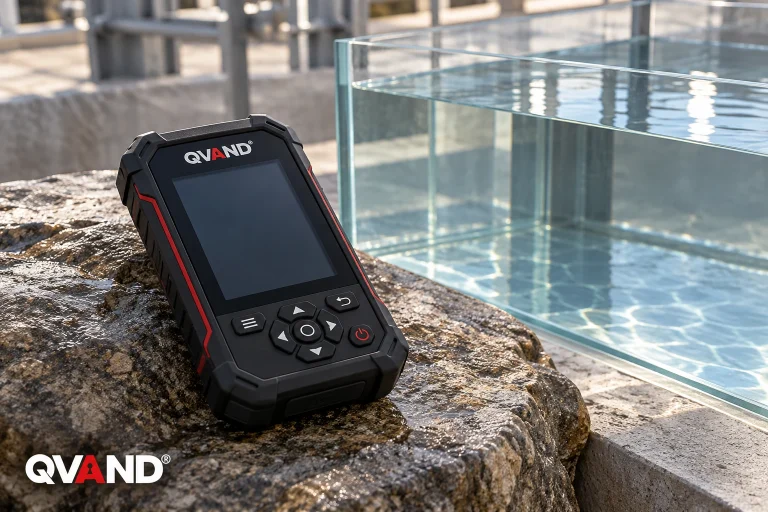

IP66 combines a dust-tight classification with protection against powerful water jets under the stated conditions. Both numerals matter: the first 6 concerns solid-particle ingress, and the second concerns water. The rating does not establish immersion protection or prove that every outdoor or cleaning environment is suitable.
For electronics enclosures, the most useful comparison is between the actual exposure and the documented assembled product. A powerful-jet category is relevant to one kind of water challenge. It should not become a general promise of durability.
What IP66 adds to the comparison
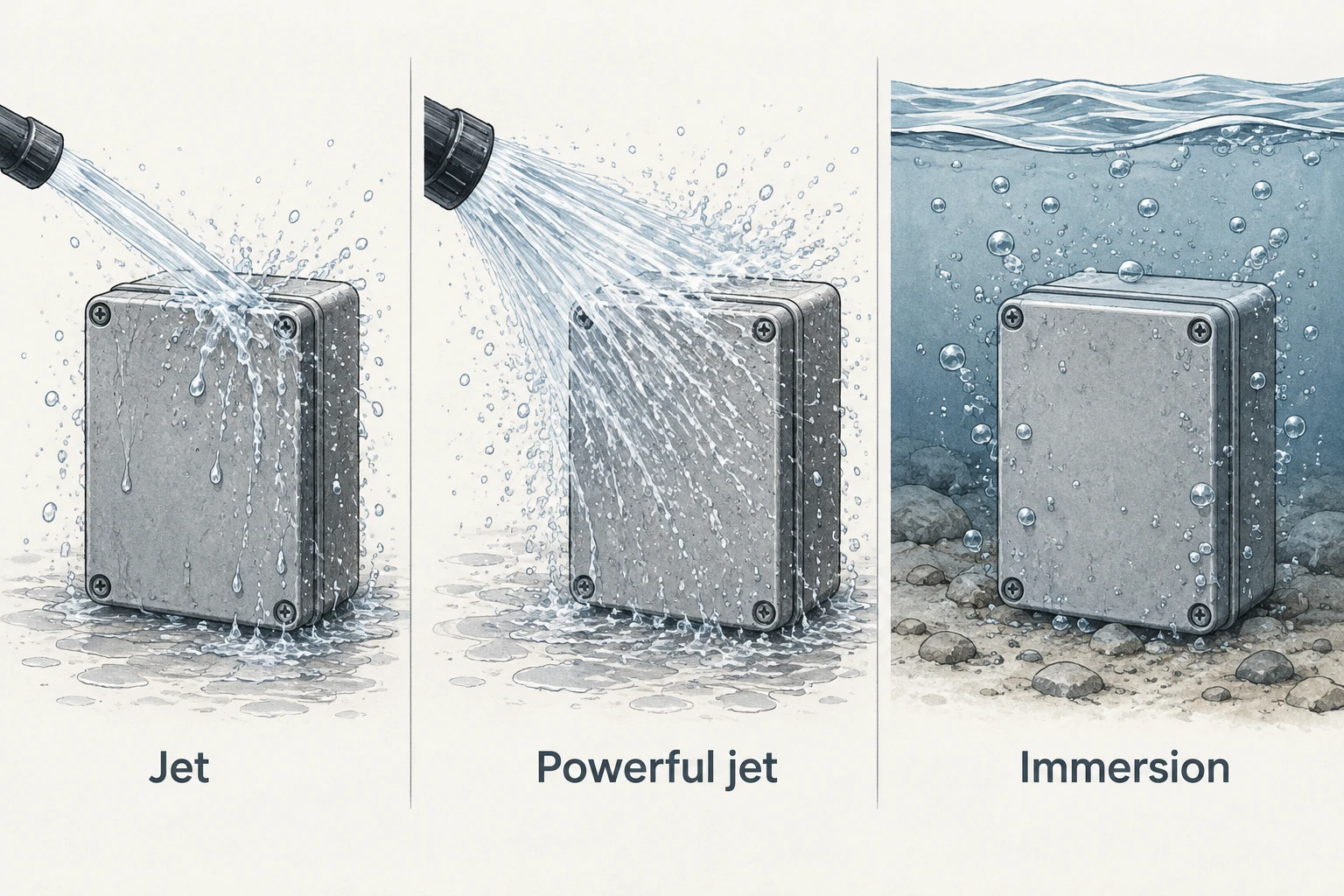
IP65 and IP66 share the dust-tight category. Their water categories differ: jets for IP65 and powerful jets for IP66. This distinction gives a purchaser a more precise starting point than the word “sealed.” The applicable test record remains necessary to identify the conditions and the assembly evaluated.
IP67 changes the water category to temporary immersion. That is not simply a statement that it tolerates a more powerful cleaning jet. ABB’s IP guidance distinguishes immersion from jet protection, so the two claims should be checked separately when both are relevant.
| Rating | Dust category | Water category |
|---|---|---|
| IP65 | Dust-tight | Jets |
| IP66 | Dust-tight | Powerful jets |
| IP67 | Dust-tight | Temporary immersion |
Match cleaning conditions without overextending the claim
A production team may ask for IP66 because equipment is near a cleaning zone. That can be a sensible question to investigate, but the code alone does not describe the complete cleaning process. Water temperature, chemicals, nozzle conditions and the equipment’s permitted cleaning instructions all affect the comparison.
For example, a supplier’s statement for a closed enclosure does not necessarily address a door opened for cleaning. Nor does a water-ingress classification by itself establish chemical compatibility. The procurement record should separate the stated water protection from any additional material or cleaning claims.
This avoids a common documentation gap: the enclosure is specified carefully, but the cleaning task is described only as “washdown.” Replacing that word with the actual expected exposure gives the manufacturer a question it can answer for the selected product.
Identify the complete boundary
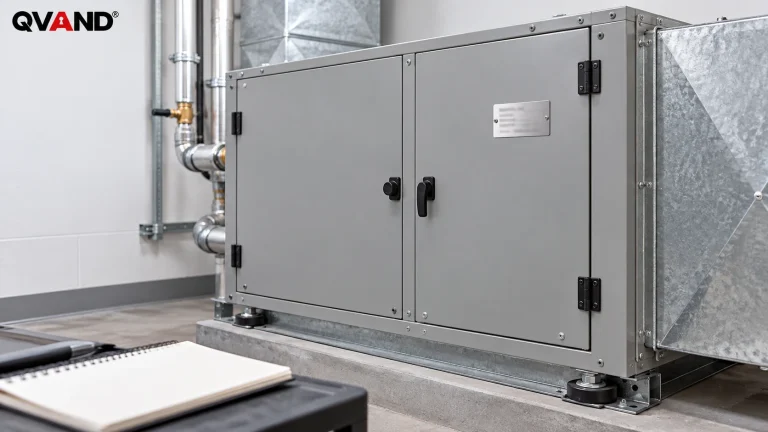
An enclosure body, a door seal and a cable-entry component may each have their own documentation. The relevant purchase is the configured assembly. Ask which openings, connectors, covers and accessories are included in the rating statement, and match the answer to the drawing revision being ordered.
A cabinet with blank walls and a cabinet fitted with optional entries should not be treated as identical merely because they share a product-family name. If a mounting or service change alters the enclosure boundary, the supplier needs to confirm the effect on the documented claim.
It also helps to distinguish a new enclosure from its maintained condition. The manufacturer’s instructions should address closure and service requirements. An IP code does not supply a universal torque, gasket lifetime or maintenance interval for all cabinets.
Outdoor suitability asks additional questions
Water and dust are only part of an outdoor environment. A team may also need information about temperature, sunlight, corrosion or mechanical exposure. None of those properties should be inferred solely from the two numerals in IP66.
The practical approach is to list the exposures that actually matter at the intended location, then identify the evidence for each one. That is more efficient than asking for every possible rating, and more reliable than treating one code as a complete outdoor specification.
Keep ESD packaging in its own role
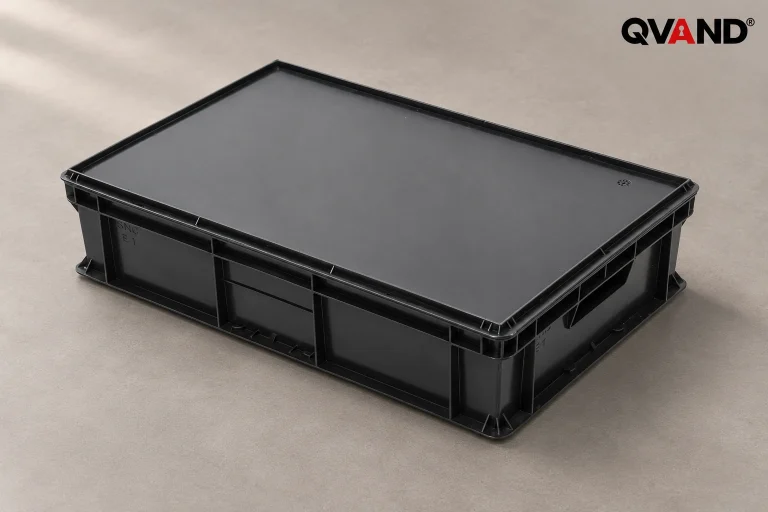
Electronic assemblies may need protection during production movement before they enter a finished enclosure. CH-ESD’s ESD containers offer storage and transfer formats for that stage. Their electrostatic properties and mechanical arrangement must be considered separately from an IP66 claim.
If the handling route also requires a water barrier, ask for evidence covering the exact container, lid and closure configuration. Do not transfer an equipment enclosure’s rating to an outer tote. A complete selection names the product, identifies the exposure and keeps each supporting claim within the boundary its documentation actually covers.