
How to get static out of clothes depends on whether the problem is ordinary static cling or a controlled electronics workplace. For everyday clothing, start with the care label, reduce over-drying, manage friction, and choose a suitable fabric-care method. Those steps can reduce cling, but they do not qualify a garment for an ESD-protected area.
Static builds more easily when materials contact and separate, when synthetic fibers retain charge, and when dry conditions make charge less likely to dissipate. A practical household fix should therefore be judged by whether it reduces the immediate cling without damaging the garment. An electronics workplace needs a second review: garment category, personnel grounding, footwear and flooring, work surface, packaging, and the site’s documented ESD-control program.
The fastest useful answer is to separate the two jobs. Think of static electricity removal as a household comfort step, then evaluate anti-static clothing and the wider static control program separately. Treat the clothing for ordinary comfort and handling first. Treat ESD protection as a process-control decision with evidence.
How to Get Static Out of Clothes: Everyday Static Removal
When a garment is already clinging, use the least aggressive option that fits the fabric and the care instructions. These steps address everyday static; they are not a substitute for a workplace ESD procedure.
- Follow the care label: use the permitted wash and dry settings, because excessive heat or drying can change the fabric and increase friction later.
- Avoid over-drying: remove the garment when it is dry rather than leaving it in a hot, tumbling dryer longer than needed. A slightly less dry finish can reduce cling for some fabrics.
- Use an approved fabric-softener or dryer-sheet method only when the garment label and the product instructions allow it. The goal is ordinary static-cling reduction, not an ESD performance claim.
- Separate high-friction combinations: synthetic garments rubbing against other synthetic fabrics can make cling more noticeable, especially after drying.
- Reduce friction while dressing: smooth the garment rather than repeatedly rubbing it against another fabric or a dry surface.
- If a garment must enter an electronics area, follow that site’s clothing and personnel-control rules instead of adding an unapproved spray, coating, or household treatment.
Why clothes become staticky
Static electricity is an imbalance of charge that can remain on a surface. Contact and separation move charge between materials, while friction, fabric structure, surface condition, motion, and surrounding conditions influence how much charge is generated and how long it remains. Synthetic fibers can be especially noticeable because they may retain charge and cling to other fabrics.
Dry conditions can make the symptom more obvious because charge has fewer opportunities to dissipate through the surrounding environment. That does not mean one humidity reading explains every event. Fabric blend, finish, detergent, drying time, movement, skin contact, and the surfaces around the garment all influence the result.
The visible cling is only the symptom. A garment may attract another fabric, crackle when removed, or produce a small shock after a person crosses a floor. In a normal household, the practical objective is comfort and reduced nuisance. In an electronics process, the objective is to keep an ESD-sensitive item within the site’s defined control method.
Laundry and environment choices that help
A good clothing-static routine begins with the garment rather than a generic internet remedy. Check whether the fabric can accept softener, a dryer sheet, reduced heat, air drying, or a different drying time. If the garment has a special finish, coating, flame-resistance requirement, or workplace specification, the care label and garment documentation take priority.
Fabric softener can reduce ordinary cling for some manmade fibers, and extension guidance commonly treats it as a laundry measure. That advice belongs to the household-care scope. It does not establish a garment’s resistance, charge-decay behavior, grounding path, or suitability for an ESD-protected area (EPA). A product that improves comfort can still be the wrong choice for an electronics process.
Over-drying is another practical variable. A dryer can increase friction and leave some fabrics more prone to cling when the cycle continues after the garment is dry. The safe adjustment is to use the care label, reduce unnecessary drying time, and check the result on the actual garment. Do not assume that a single change will work for every fiber blend.
Moisture can influence how charge dissipates, but a general household observation must not become a workplace control limit. Industrial areas need the environmental range and monitoring method defined by the site’s ESD control program and the applicable equipment or process requirements.
What changes in an electronics or ESD-protected workplace
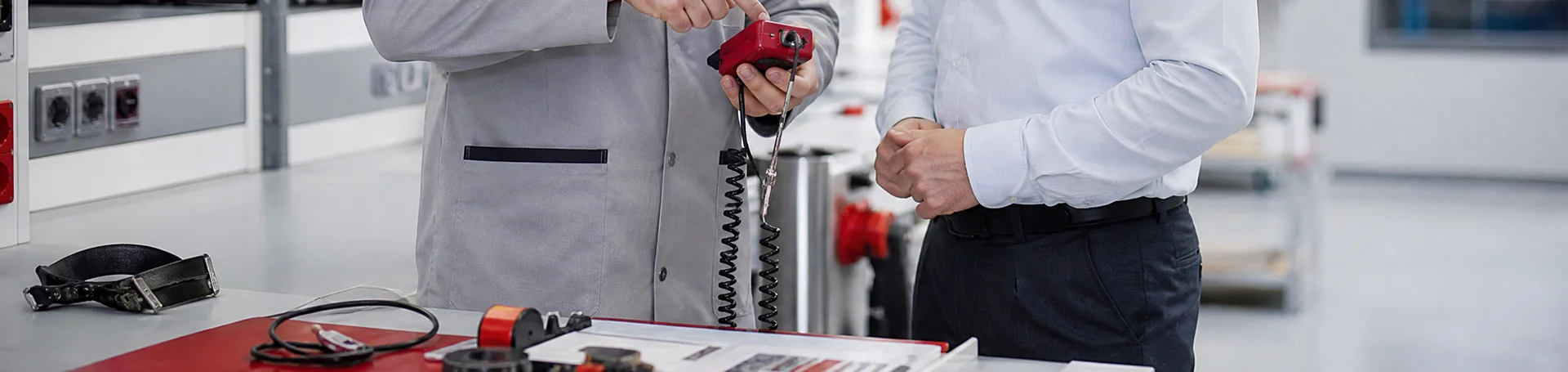
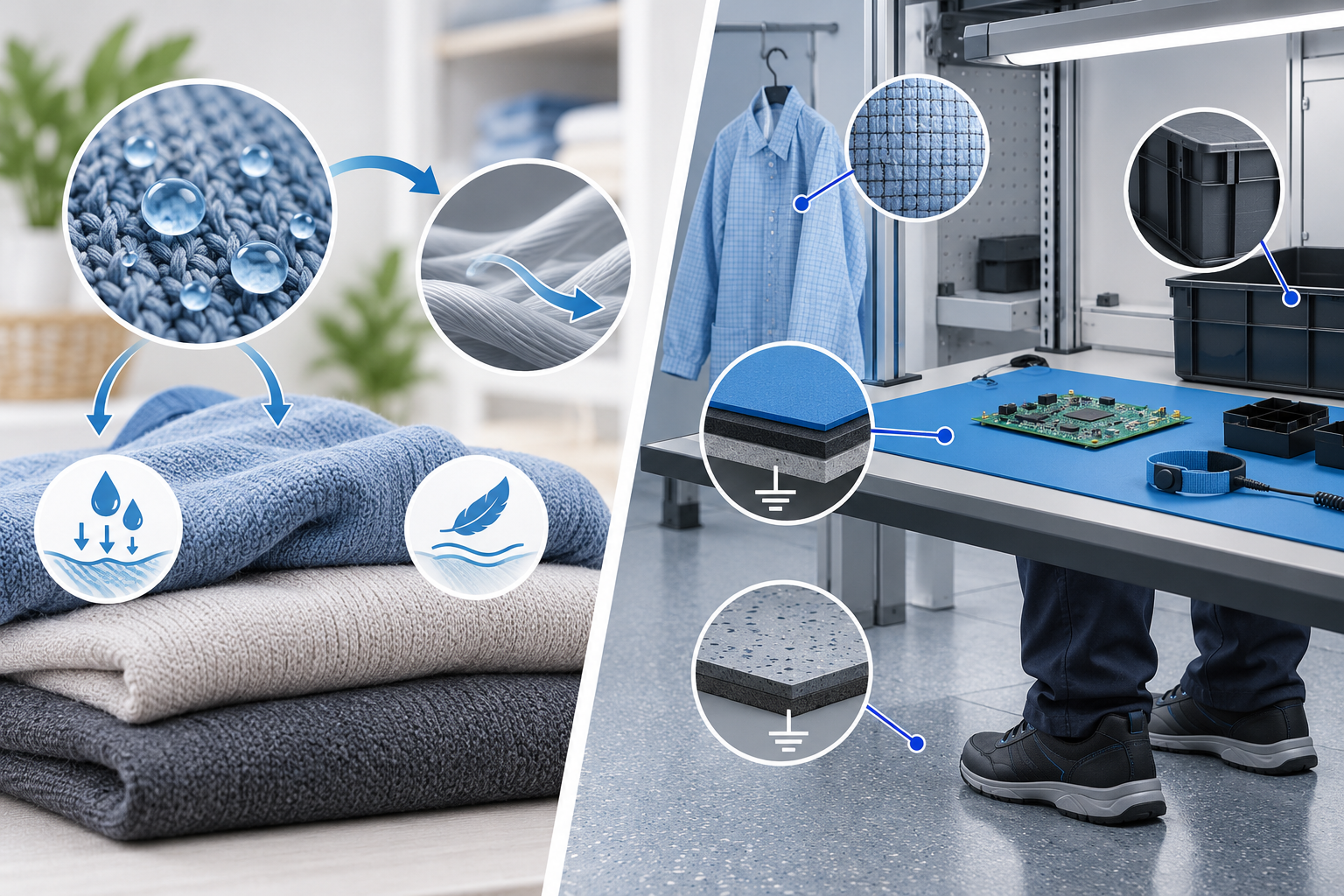
The question changes as soon as clothing is worn around exposed electronic components. The site must decide how personnel, garments, footwear, flooring, work surfaces, tools, fixtures, and packaging fit into the ESD-control program for that ESD-protected area. ESDA guidance treats clothing as one part of a larger control method, and the garment test-method scope does not turn a label into a universal guarantee.
A garment can be comfortable and still be unsuitable for a specific ESD process. The control team may need to know the garment construction, its intended use, the personnel grounding method, the footwear and floor interface, and the conditions under which the garment is inspected or maintained. The answer depends on the process, the exposed item, and the evidence required by the organization.
If the workplace handles sensitive parts, keep a simple decision record. Identify the item and its exposure point, the clothing and personnel controls, the work surface, the footwear/flooring path, the package used before and after the operation, the verification method, and the owner of the record. That record is more useful than a generic claim that the shirt or coat is anti-static.
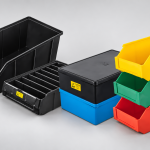
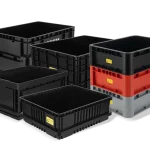
For storage and handling after the garment question is addressed, CH-ESD’s product catalog can help a team review product families, while the ESD Box category provides a route for reviewing electronics storage formats. These links support handling-product discovery; they do not prove clothing performance or certify an ESD program.
What not to assume
- Fabric softener removes ESD risk. It may reduce household static cling, but it does not qualify a garment, person, workbench, or EPA.
- An anti-static label is enough. The label must be matched to the garment type, use conditions, test basis, maintenance, and the site’s control method.
- A lower humidity symptom proves a workplace is controlled. Environmental conditions need a defined range, monitoring method, and process owner.
- Grounding the building is the same as controlling personnel clothing. Electrical installation grounding and ESD control grounding must be reviewed within their own scopes.
- A garment treatment can be added without approval. Coatings, sprays, softeners, and cleaning changes can affect material behavior or the workplace process; route the change through the site’s owner.
A practical decision path
Use this sequence when a team is moving from a household static complaint to a workplace question.
- Classify the situation: ordinary clothing comfort, a dry industrial workspace, an EPA, or a hazardous-area clothing requirement. Do not use the same evidence for all four.
- For ordinary clothing, check the care label and test one low-risk change at a time, such as reducing over-drying or using an approved fabric-care product.
- For electronics handling, document the exposed item, clothing category, personnel grounding method, footwear/flooring, work surface, package, and verification record.
- Ask the garment supplier or ESD program owner for the applicable test basis, configuration, revision, and maintenance conditions. Do not infer performance from color, feel, or the word anti-static.
- Record the result and the limits. If the garment, laundering method, workstation, footwear, flooring, packaging, or environment changes, review the process again.
This approach keeps the broad search answer useful while protecting the technical boundary. A person can reduce annoying cling at home without claiming that the clothing is suitable for handling an exposed circuit board. A workplace can then make a separate, documented decision based on the item, the route, and the ESD controls that actually apply.
If a static problem remains after ordinary care changes, inspect the material combination and the surrounding surfaces rather than adding increasingly strong treatments. In a controlled workplace, send the question to the ESD program owner. In a hazardous atmosphere, follow the applicable workplace safety requirements and use the specified clothing and footwear system.
FAQ
Does fabric softener remove ESD risk?
No. Fabric softener may reduce ordinary static cling for some fabrics when used according to the care instructions, but it does not qualify a garment or prove that a person, workstation, or EPA is controlled. Workplace ESD decisions need the site’s documented controls and applicable evidence.
Do anti-static clothes need grounding?
The answer depends on the garment, the process, the personnel-control method, and the applicable workplace requirements. An anti-static label does not define the complete path. The ESD program owner should specify how clothing works with personnel grounding, footwear, flooring, work surfaces, and verification.
References
- EOS/ESD Association: ESD Fundamentals, Part 3 — clothing, grounding, footwear/flooring, materials, packaging, and ESD-control procedures.
- EOS/ESD Association: ANSI/ESD STM2.1 — scope of resistance characterization for static-control garments.
- UK HSE: Static electricity and explosive atmospheres — workplace control context for anti-static clothing and footwear.
- Kansas State University Research and Extension: static cling guidance — household fabric-care scope for reducing ordinary cling.