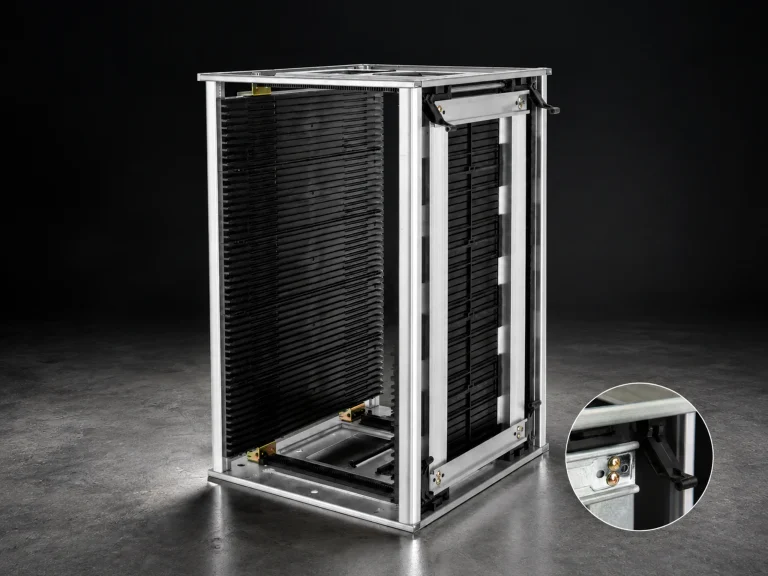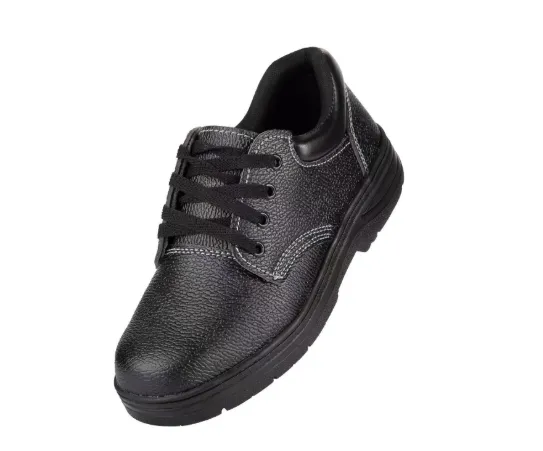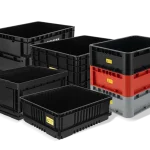


ESD parts bins work best when the storage face matches the component family, access frequency, and replenishment route. The goal is not to put every part into a bin that looks similar. The arrangement keeps identities separated, makes the pick action repeatable, and preserves the storage and handling conditions required by the ESD control process.
Use the ESD bin product family as the starting point for comparing open, front-opening, drawer, and round component-bin formats. Before choosing a format, map the component envelope, pack quantity, access direction, label position, lot separation, and route from replenishment to the point of use.
1. Organize ESD parts bins by the real pick task
Start with the operator’s normal action. If the part is picked repeatedly from a shelf, front-opening access may reduce reaching and make the contents visible. If small groups must remain contained, a drawer format may give better separation. If the bin is replenished from the top or moved between stations, the carrier, stack, and handoff should be part of the decision.
Define what must never be mixed: part numbers, revisions, lots, polarity variants, or packaged and unpackaged states. Use a separate location or divider when one bin cannot make the distinction obvious. The label should support identification without becoming the only control; the storage record and the physical arrangement should agree.
| Pick-face question | Selection input |
|---|---|
| How often is the part picked? | Access frequency, hand position, and replenishment interval |
| What must stay separated? | Part number, revision, lot, polarity, and packaging state |
| Where is the bin used? | Fixed shelf, line-side station, cart, rack, or receiving area |
2. Match ESD storage bins to component handling
The storage bin should fit the way components arrive and leave the location. Record the largest package or part envelope, whether parts are loose or bagged, approximate quantity, and whether an operator needs one-hand retrieval. Small components may need a contained drawer or divider arrangement, while larger packages may need an open face and a clear support surface.
Keep the ESD role tied to the actual material and route. An ESD label, color, or product category does not replace material documentation or process controls. Ask how the proposed bin is used with bags, trays, shelves, carts, and workstations, and what test basis or evidence applies to the finished handling arrangement.

3. Design the replenishment and identification route
A good bin location makes both picking and replenishment visible. Set the label position, define the front of the bin, and decide whether an empty or partial location has a standard signal. If a component is replenished from a bulk container, specify the transfer point and the control that prevents old and new lots from being mixed.
For applications that use a specific component-bin format, the ESD component bin route can support a more focused comparison. Confirm the actual access style, divider or drawer requirement, and the surrounding rack or shelf before asking for a final configuration.
4. Send a supplier-ready parts-bin request
Include the following fields in the first request:
- Contents: component family, largest package or part envelope, quantity, and loose, bagged, boxed, or nested state.
- Access: open, front-opening, drawer, or lidded access; withdrawal frequency; and one-hand retrieval needs.
- Organization: divider layout, label position, SKU or lot separation, and replenishment method.
- Route: fixed shelf, line-side station, cart, rack, receiving area, or repeated movement between departments.
- Evidence: material classification, applicable test basis, documentation, drawing revision, and conditions attached to the result.
Only the supplier can confirm configuration-specific values. A precise request gives the supplier a usable brief and gives the team a clear record of why the selected ESD bin fits the process.
Before standardizing the bin, run a short pilot at the real pick face that includes both a normal pick and a replenishment cycle. Observe reach direction, content visibility, label reading, replenishment handoff, mixed-lot risk, and the condition of parts after normal movement. Record the location, bin format, divider or drawer arrangement, and storage-map revision, then update the location map, replenishment instruction, and supplier request before copying the layout to another line or department.