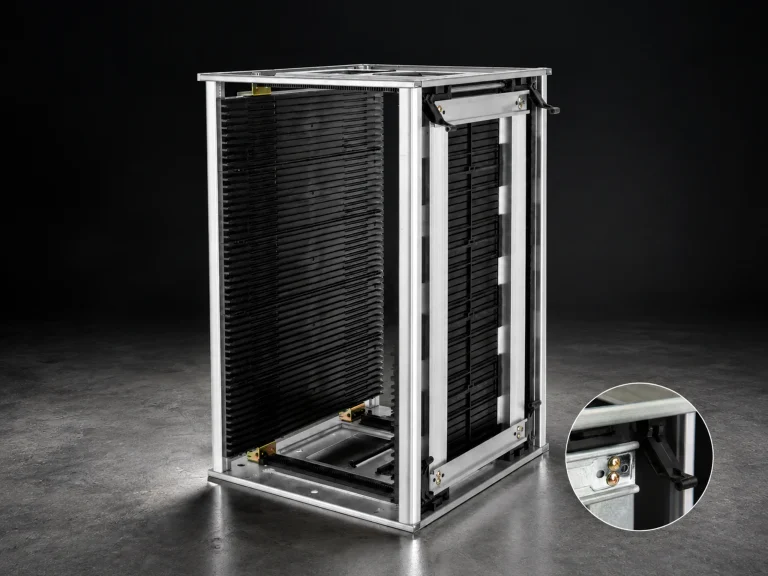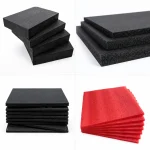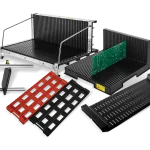


An ESD tray liner is selected by the contact surface and the handling route, not by the word “ESD” alone. Start with the tray’s usable footprint, the component or package envelope, and the way operators pick, clean, and replenish parts. Then ask for the material, resistance test basis, and configuration evidence for the exact liner.
1. What an ESD tray liner needs to solve
A liner normally has three jobs: provide a defined contact surface, keep parts from moving into an unsuitable edge or corner, and make the tray easier to adapt to a repeatable handling route. Those jobs can conflict. A soft or textured surface may improve restraint but reduce clearance; a full-size sheet may be easy to replace but require accurate trimming; a liner with openings may improve access while exposing more of the tray below. State the job before comparing materials.
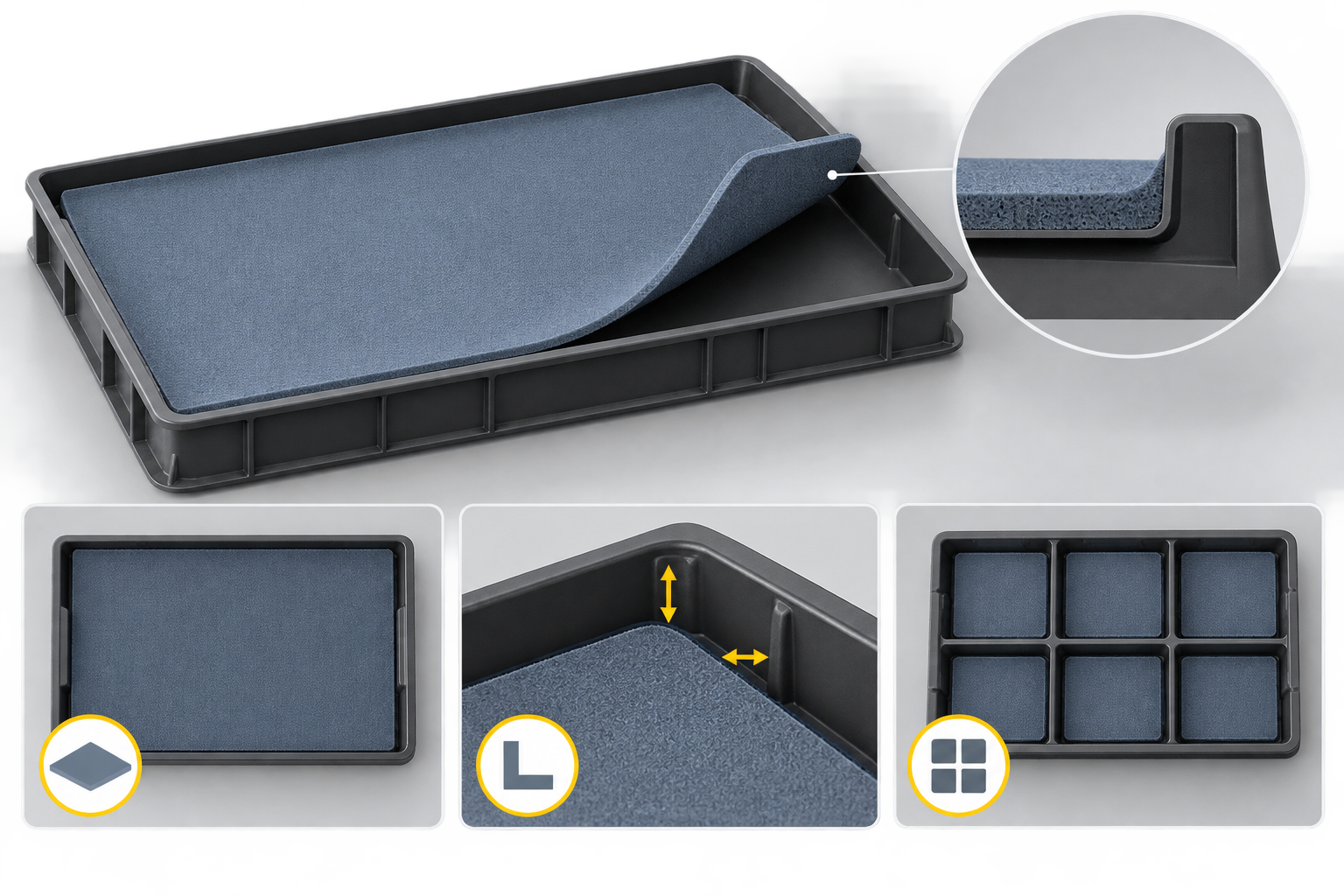
2. Match the liner to the tray and component envelope
Measure the tray inside length and width, usable depth, corner radius, edge height, and any locating features. Measure the largest component envelope or package, not only a representative small part. Check whether the liner must cover the whole base, sit under dividers, follow a formed surface, or leave a clearance zone around a handle or label. A liner that fits the outside dimensions can still lift at the corners or reduce the usable working area.
3. Ask for material and resistance evidence
Treat “anti-static” or “ESD” as a request for evidence rather than a complete specification. Ask which material is used, where the measurement was taken, which test method or test basis applies, and whether the result covers the liner alone or the liner-and-tray configuration. Also ask about cleaning agents, temperature exposure, replacement criteria, and whether cutting or bonding changes the stated behavior. The standards below provide useful context; they do not certify this specific product.
4. Build a supplier-ready sizing request
Send the tray drawing or inside dimensions, component envelope, quantity per tray, divider or cover requirement, access direction, cleaning route, and expected order quantity. Request the liner thickness, edge treatment, cutout drawing, tolerance, material identification, resistance evidence, and sample approval method. If several tray sizes share one liner family, ask for a matrix showing which dimensions and accessories are interchangeable. Link the request to the CH-ESD ESD Tray family so the supplier can match the inquiry to a real product route.
- Review the CH-ESD ESD Tray family for the available tray route and product context.
- For a specific configuration, use the contact route with the measured inside dimensions and handling requirements.
Before approving a liner, run a short sample check with the actual tray and the actual handling sequence. Place the largest and smallest representative parts in the proposed configuration, then inspect corner lift, movement during transfer, label visibility, and removal clearance. Repeat the check after cleaning or after the liner has been cut to its final outline. Record the approved drawing revision, material description, and replacement rule so a later order does not silently change the contact surface.
For repeat orders, keep the liner request tied to the tray family, not to a loose image or a remembered size. A simple record should identify the tray, liner outline, accessory or divider arrangement, component envelope, inspection method, and supplier evidence. That record helps purchasing compare like for like and gives production a clear reason to reject a liner that fits physically but changes the handling process.
A PCB tray and its liner should be reviewed as one handling unit. Compare the liner outline with the tray openings, separators, and any cover used for the route. The phrase anti static tray may describe a search need, but the quote still needs the exact material, dimensions, and test basis for the selected assembly.
For a repeatable program, keep a short approval record with the tray identifier, liner drawing, cleaning method, sample result, and replacement rule. This is more useful than storing a product photo because it explains which ESD trays and accessories were actually accepted for the work cell.
References
- EOS/ESD Association: ANSI/ESD S541-2026 — packaging properties and test-method context.
- EOS/ESD Association: ESD Fundamentals, Part 3 — ESD control procedures and materials.
- IEC 61340-5-1:2024 — ESD control-program requirements.
- Transforming Technologies: ESD Tray Liner — example of a tray-liner product reference in the current SERP.