
ESD steel toe shoes solve two different workplace problems. The toe area addresses a physical foot hazard; the ESD footwear system addresses electrostatic control through the person, shoe, floor, and route. Approve the pair only when both tracks have evidence for the actual workplace.
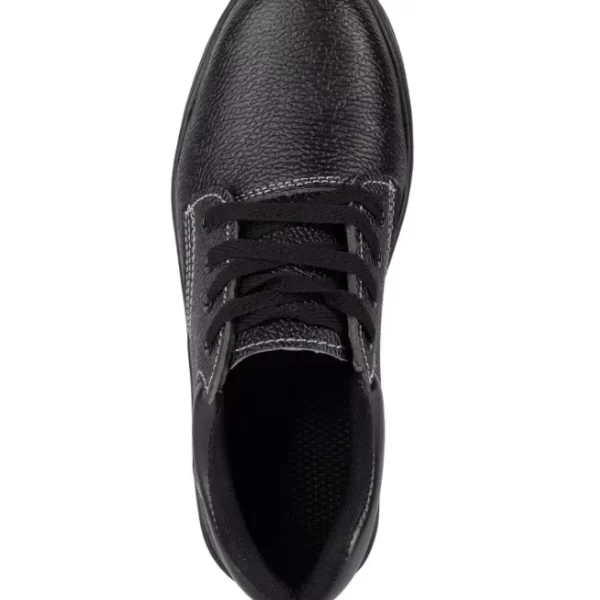
The CH-ESD QD-9108 product page can be used as a supplier route for the configuration discussion. It should not be treated as a certification record until the model documents and site requirements are checked.
1. ESD Steel Toe Shoes: Separate Toe Protection From ESD Control
Begin with the employer’s hazard assessment. Identify falling or rolling objects, puncture exposure, slip conditions, electrical hazards, cleanroom restrictions, and the areas where protective footwear is required. OSHA PPE guidance places selection within the employer’s hazard assessment and applicable protective-footwear criteria; an ESD label does not replace that workplace decision.
Then define the ESD path separately. The shoe must work with the floor and the person, and the combination must be verified under the conditions used at the site. Keep the toe-cap approval record and the ESD footwear-flooring record as separate evidence items that meet at the final approval step.
2. Match the shoe to the floor and movement route
Map where the operator stands and walks. Record the floor type, maintenance condition, workstations, transitions between rooms, and whether the shoe is worn in more than one controlled area. EOS/ESD Association guidance explains that footwear and flooring must be considered together; separate product measurements do not describe every real walking route.
Check the fit and work pattern as well. Record shift length, standing time, size range, fastening preference, toe-room needs, cleaning method, and any gowning or cleanroom restriction. A shoe that cannot be worn consistently or maintained in the approved area will weaken the process even if its paperwork looks complete.
3. Request the right model and verification evidence
Ask the supplier for the exact model revision, toe-protection standard or test basis that applies, ESD footwear test method, footwear-flooring conditions, size range, sole construction, and any care limits. Do not accept a generic statement that all shoes in a family have the same performance.
The site should define how the approved model is checked after delivery and after changes. Record the floor, model, test date, environmental conditions, result, and person responsible for release. If the floor or footwear changes, repeat the review before returning the pair to the controlled route.
For industrial ESD footwear, create two approval lines in the purchasing record. The first line identifies the physical hazard and the protective-footwear evidence. The second line identifies the ESD route, floor, test method, and site acceptance. Join the lines only after the model, size, and workplace conditions are confirmed.
Terms such as steel toe ESD shoes and ESD safety toe shoes describe the buyer’s need, but they do not identify a universal construction or legal approval. Use them to start the search, then request the exact model documents and compare them with the employer’s hazard assessment.
The approval record should also identify what happens when the requested combination is unavailable. Decide whether the toe-protection requirement, ESD path, fit, or cleanroom condition is the limiting requirement, then ask the supplier for an alternative with separate evidence. A substitution should be reviewed as a new configuration rather than accepted because the product name looks similar.
4. Use a two-track supplier approval checklist
Include these fields in the request:
- Physical hazard: toe, puncture, slip, electrical, chemical, cleanroom, and other workplace requirements.
- ESD route: floor, controlled area, walking path, footwear-flooring test method, and acceptance criteria.
- Fit and use: sizes, shift, standing, movement, cleaning, fastening, and replacement plan.
- Documents: model revision, test reports, conditions, standard edition, and supplier declaration where applicable.
Only release the configuration after the employer’s safety owner and the site ESD owner agree that both evidence tracks are complete. The supplier can then confirm which QD-9108 configuration, if any, fits the route.