

ESD vacuum bags can combine a static-control packaging route with a controlled moisture-handling process, but the bag is only one part of the protection chain. The correct selection depends on the component, storage interval, moisture exposure, sealing method, and the way the package is opened before assembly. A reflective surface or a vacuum-looking package does not prove the finished system is suitable for every electronics workflow.
Start by describing the actual route: incoming parts, dry storage, internal movement, shipment, or a combination. Then match the bag construction and closure process to the evidence your team needs. The CH-ESD ESD shielding bag product family is a related route for reviewing the static-control side of that discussion; it should not be treated as proof of vacuum sealing or moisture-barrier performance. Request a verified vacuum or moisture-barrier configuration and supplier confirmation before recommending a final bag.
1. Define the route before choosing ESD vacuum bags
Separate three questions that are often blended together. First, what static-control function is required around the component? Second, what moisture condition must be controlled during storage or shipment? Third, how will the package be sealed, inspected, opened, and transferred to the next operation? These questions may lead to a shielding bag, a moisture-barrier bag, an outer protective layer, or a combination that must be specified as a system.
Record the component envelope, whether it is already in a tray or foam support, the number of openings, the storage environment, and the route from packing to use. If the package is evacuated or sealed by a process step, document who performs that step and what evidence is retained. The process record matters because the package condition at opening is part of the application.
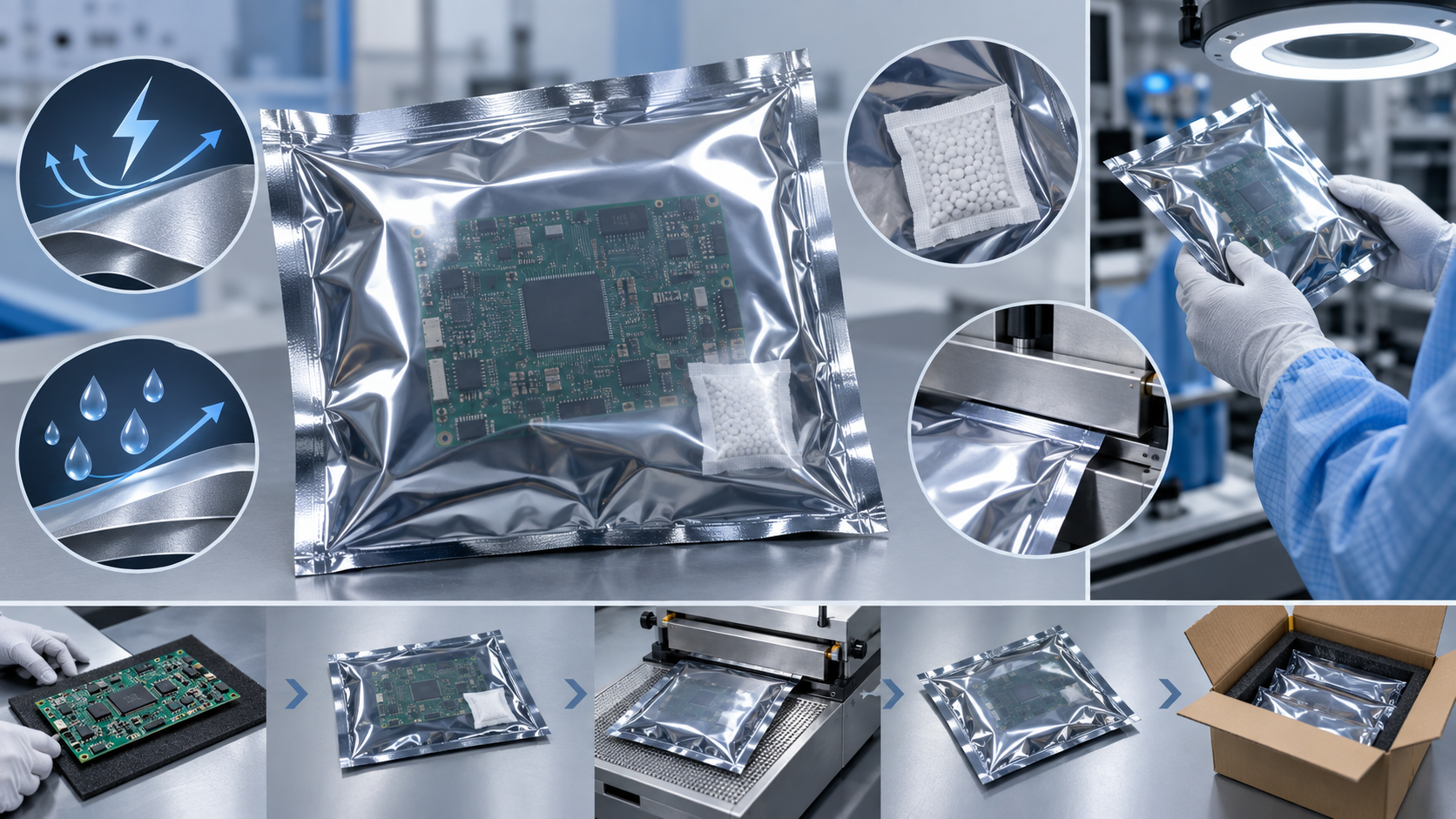
2. Keep shielding and moisture-barrier decisions separate
An ESD shielding description addresses a static-control objective. A moisture-barrier description addresses exposure, storage, and handling conditions. They are related in an electronics packaging workflow but they are not interchangeable claims. Ask for the applicable construction, closure method, storage conditions, and test basis for the exact bag and package combination.
Desiccant, humidity indicators, and an outer carton may be part of a moisture-control procedure, but their presence does not automatically establish a complete dry-pack process. Define what is inside the bag, how the bag is closed, where the indicator is read, and what happens if the package is opened or damaged. Keep supplier documentation connected to the finished route rather than to an isolated material name.
3. Design the bag workflow around handling and opening
Bag selection should include the operator’s access path. Confirm whether the component is loaded by hand, placed in a tray, or supported by foam before sealing. Leave enough space for the actual part and its support without relying on a tight fold that could stress connectors or corners. Define where the seal is made, how it is inspected, and how the package is labeled without placing marks over the viewing or sealing area.
At the receiving or assembly end, document the opening sequence and the handoff into the next ESD storage container or work area. If components remain in the bag until a controlled operation, say so. If the bag is opened repeatedly, include that behavior in the supplier and process review because it changes the practical protection route.
4. Request evidence for the finished protective electronics package
A supplier-ready request should include the following information:
- Component: part family, envelope, sharp features, board or package support, and quantity per bag.
- Route: receiving, storage, shipment, opening point, and next handling location.
- Protection: static-control objective, moisture exposure, closure method, desiccant or indicator requirement, and outer packaging.
- Verification: applicable material documentation, test basis, package inspection, storage conditions, and evidence retained after sealing.
- Commercial fields: bag dimensions to be confirmed from the part, quantity, print or identification requirements, and requested sample approval.
This keeps the request focused on a real package route. It also prevents the common error of treating vacuum packaging, moisture control, and ESD shielding as one unqualified product claim.
A sample review should follow the same order as production: load the part, place any supporting material, close the package, record the inspection point, store or move it under the intended route, and open it at the receiving operation. Note damage, seal quality, indicator visibility, labeling, and the condition of the component support. Those observations help separate a bag-material question from a process question.
If the package will be opened outside the original packing area, include that handoff in the review. The team should know which evidence travels with the package and which condition requires escalation before the part is released.